Von: Discomfort, Devotion, and Dance Floors
article by Eva Fournel
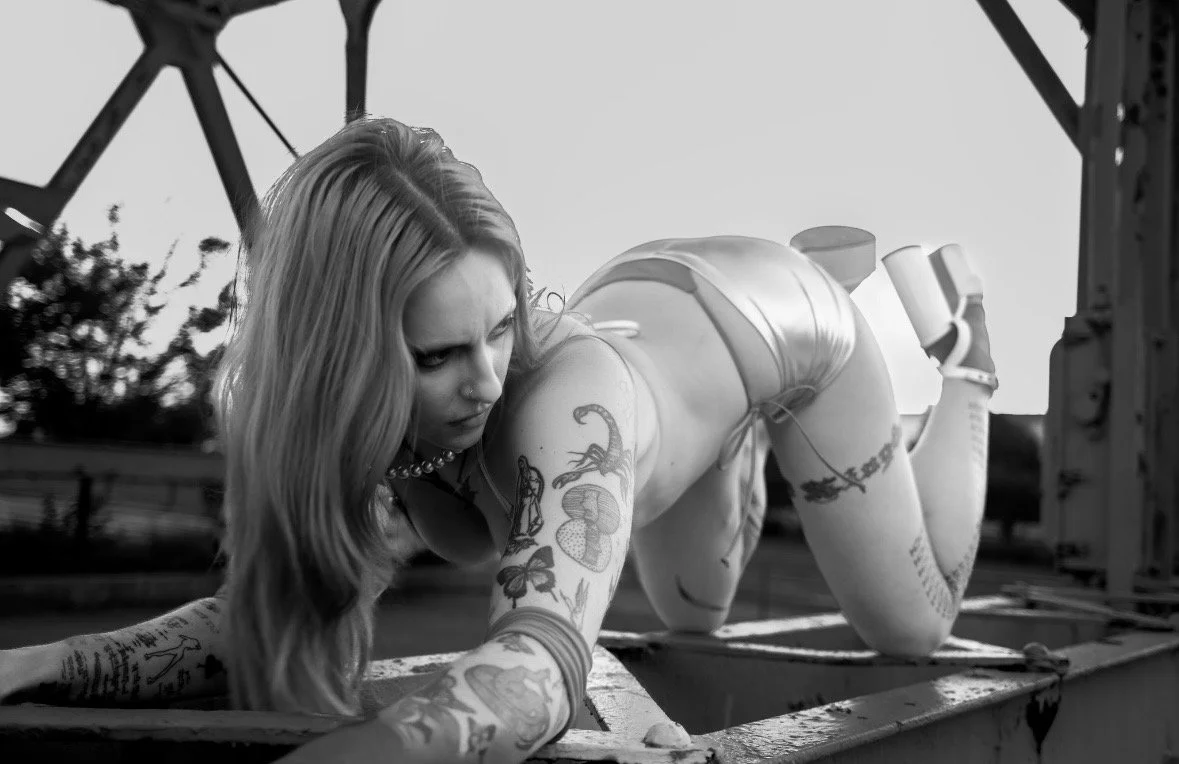
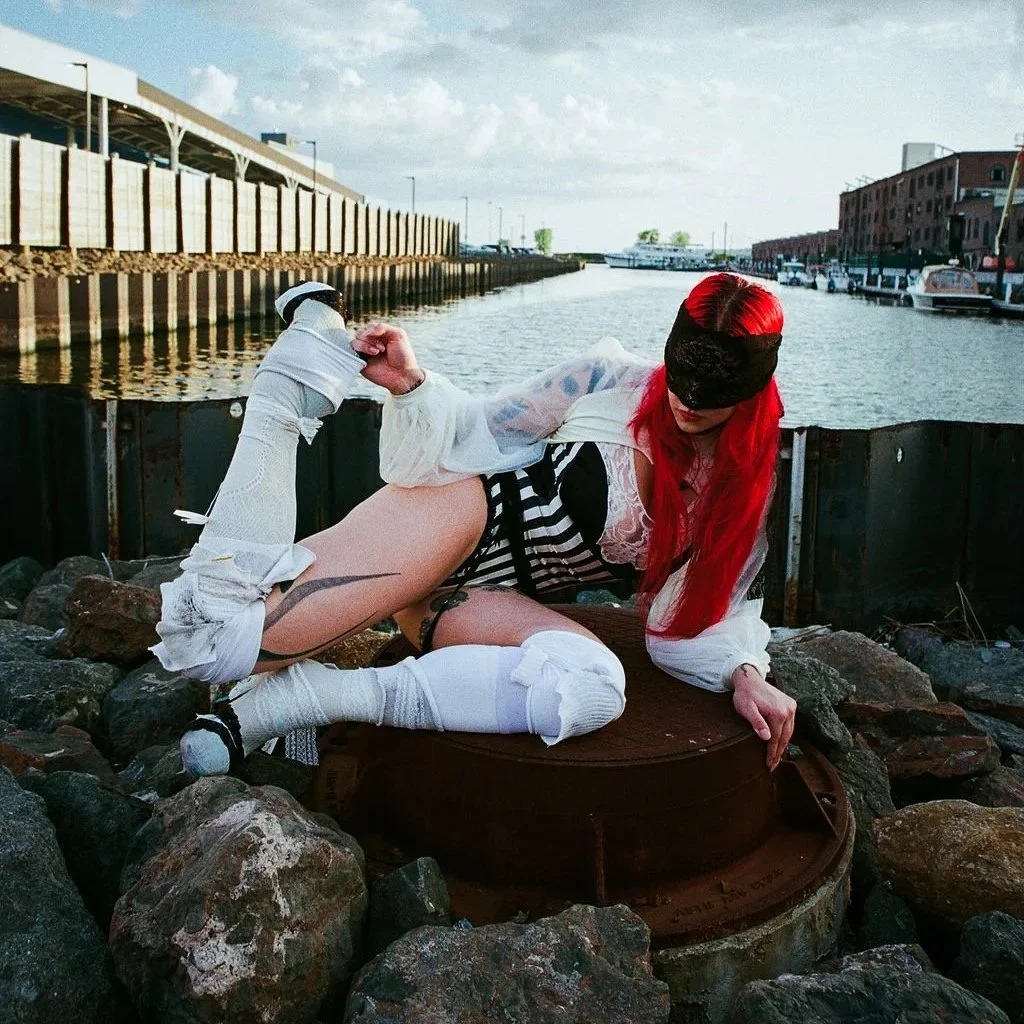
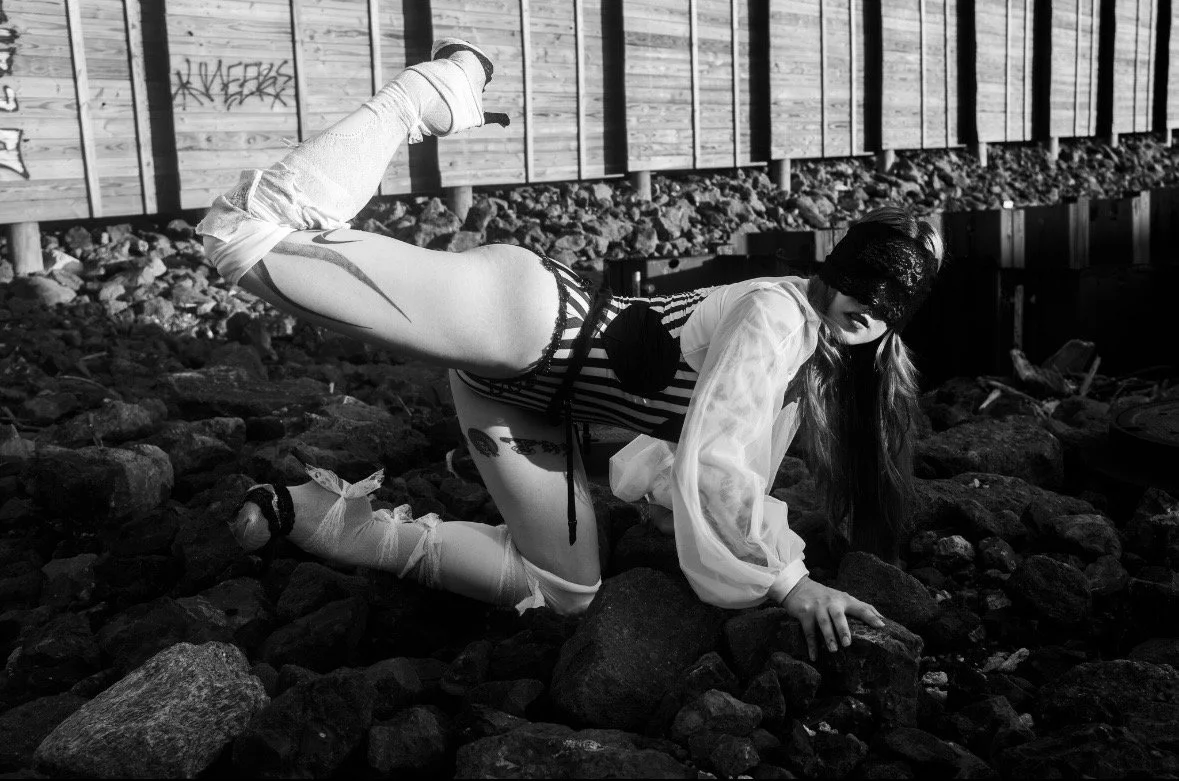
Von doesn’t seem particularly interested in following the rules. Raised in a small Catholic town in Pennsylvania and now based in Brooklyn, the musician, DJ, and performance artist has built a world around questioning the things she was taught to accept: religion, community, discomfort, and what it means to be an artist in the first place.
Her work often explores the space between performance and participation, drawing on ideas of ritual and transformation. She approaches music with the same curiosity she brings to everything else, constantly questioning what we believe, and what we choose to create for ourselves. Ahead of her upcoming release, I sat down with Von to talk about unlearning, nightlife, and the tension between process and outcome.
Eva Fournel: If you could please introduce yourself…
Von: My name is Von, my pronouns are she/her and I am a musician, performance artist, and DJ based in Brooklyn, New York.
EF: Ok, sweet, and where were you before the move to Brooklyn? Where did you grow up?
V: I grew up in a small suburban Catholic town in Pennsylvania. My extended family is really religious and I grew up around a lot of religious, conservative people. I was very integrated into my youth group—I was like going to Bible study before school my senior year of high school, so I was really in it.
EF: Byzantine catholicism?
V: Yeah, my extended family is all Byzantine Catholic but my parents ended up adopting more of like a Roman Catholic vibe; and it’s interesting because I think my parents were raised so strictly that they kind of became…they kind of have their own strange doubts, but I think their guilt was really consuming of like ‘we still have to participate,’ you know? So yeah, I definitely considered myself to be a very quote unquote ‘religious person’, but then I think what I realized as a kid is that I enjoyed the idea of what it was supposed to be, like a congregation where you could like openly share, feel spiritually connected, and the feeling that it’s not about you—all of us are having a singular experience. Like the pillars of it, I really believed in it and then I noticed that the way those things were actually practiced were not in line with any of the pillars I care about.
“Standing in a room of all these misfits felt like ‘this is what church is supposed to be’: a bunch of people from different backgrounds that show up for each other and submit to the idea that it’s not in your control—that life is a universal experience and everyone deserves grace.”
EF: When did that realization sink in?
V: In high school, I ended up getting into a falling out with one of my youth group leaders about queer people. And it was so interesting because I was like ‘Oh, this isn’t actually what I thought it is.’ There was so much talk about practicing certain beliefs that I felt weren’t really being enacted and I think that I started to really despise religion, and I kind of really abandoned it, and I think I came to New York for college really with a sense of just abandoning that belief. Once I started throwing shows and kind of cultivating a community of people, it was really interesting how all of the quote unquote ‘types of people’ that I was really taught to fear because they were satanic, or tempting in bad ways, marked by the devil were all the people that I felt, to me, represented what it was all supposed to be about. Standing in a room of all these misfits felt like ‘this is what church is supposed to be:’ a bunch of people from different backgrounds that show up for each other and submit to the idea that it’s not in your control—that life is a universal experience and everyone deserves grace. So I think perspective, instead of feeling like you know petty about it [religion], I can just create my own spaces to have the kind of spiritual practice that I wanted. I think that’s really how my little world kind of developed.
EF: Could you tell me about the original piece you composed for your classical music conservatory in high school?
V: Yeah, I was auditioning for this conservatory and they wanted me to come and play a piece and you’re supposed to play, like, Chopin or something serious, and I thought it would be kind of cool to play a thing that I was working on for fun. I did a mashup of Carly Rae Jepsen’s “Call Me Maybe” and Skrillex's “Dirty Monsters and Nice Sprites” and I thought it was, like, so cool, and this lady just so did not think it was cool at all, she thought it was so not the vibe.
EF: The satanic energy she felt in that mashup…
Von: Yes, it was like my villain origin story! I had so much fun doing that, and I realized there’s all these other avenues of breadth that I can kind of develop.
EF: What are some questions you’ve asked in your music that you’ve answered for yourself?
V: I ask myself a lot about sacrament, about what is sacrament and what does that actually mean. Like what is this idea, of either engaging in sacrament or being deemed as a sacrilegious person—what is the origin story of that? I think a lot about my lineage of being really openly gay and really not wanting to have children, of feeling, like, you know, can I still be impacted by what i think is the beauty of the intention behind a lot of these stories, that to my family, like that’s our only culture—Catholicism—but not agree with any of the things that I think the culture of Catholicism promotes. Can those two things exist at once? I think I ask a lot of questions about this idea of insatiability, of what does it mean to be in love with process over outcome, and therefore it kind of making you be a fiend all the time, and never really fulfilled? I don’t think I’ve ever really found any answers, but it always leads to at least one more question which I think is also a form of processing, to just have more questions.
EF: So with this album that’s coming out, what do you think are some of the main questions that you’ve kind of been experimenting with, something that feels different than previous music you’ve put out?
V: Something that I’ve been really really thinking about is this concept of and kind of buzzword of it all, “building community” and, like, everyone wants to be a “community builder” or "community organizer" or whatever and I just don’t believe that you build community, like, community exists already—no one is building it from scratch. You invest in community, you can make more space for community to congregate, help community compound its visibility maybe, you can prioritize community, but you’re not building it from scratch. I think I’ve been making a lot of music about this idea of like, what is the kind of pact you make as the artist with the audience, and then what do you get to deem that thing is? I think I felt this way in church a lot, it was like this weird thing in church where you had to make these undying devotional pacts, and I felt like a lot of these devotional pacts were made without the other party doing their part of the pact or hold up their end of the bargain. I think I look a lot in terms of artistic relationships or artistic communities, it’s like “If I, as the artist, am asking people to give me their time or their money or ask my friends to make things with me on my behalf, then what can you stomach to also sacrifice?” It’s been a lot of themes of sacrifice and sacrament and how they kind of play together, and also this idea of insatiability—of just being really in love with the concept of discomfort. As a kid, I think discomfort was something that I really feared, like I was not supposed to feel scared. In my adult life, I think that every time I’m close to feeling very fearful is when I’ve been really close to unlocking a new level of potential. And so I feel like I really had to learn that fear is usually a green flag versus fear is something that you really run from because you’re gonna open Pandora’s box and then ‘oh no’. So this body of work has really been about what happens when you open Pandora’s box and it’s actually ok.
“There’s a difference between spectacle and sacrament. With immersive performance, the goal is to engage in more sacrament than spectacle, and the goal of just typical performance, is more spectacle. So I think there’s a difference between the audience feeling a part of something versus just watching it.”
EF: So, on the take of ‘community’ and it already being there, how there’s no need to build it—this term that gets thrown around a lot in the arts and ‘community’ spaces: “Immersive”. What does it mean to be immersive and what does that actually look like? What’s your take on that?
V: My friend Caleb, who is an amazing tattoo artist, made this distinction and thinks it’s this: There’s a difference between spectacle and sacrament. With immersive performance, the goal is to engage in more sacrament than spectacle, and the goal of just typical performance, is more spectacle. So I think there’s a difference between the audience feeling a part of something versus just watching it. I think there’s so much to be said about the tunnel of transformation: when an audience member walks into a space, they need to be almost like lubed into this space, performed to, and then given aftercare to leave. I think that this idea of like, the audience not being led through the process has fallen by the waist sides; I’ve never enjoyed going to like a traditional music show—like I fucking hate going to Baby’s All Right and it’s like “Here’s the first opener, now here’s 20 minutes of silence, then the second opener, then 20 more minutes of silence, and then the performer” like it’s so not sexy to me. I feel like I want to be on a journey, and so I think this idea of something being immersive it’s like I would want people to come to the show and be like “I saw a Von show and it happened to be this venue” versus “I went to this venue and saw a Von show”.
“I think that, you know, so many people need nightlife. It’s like, essential for survival. It’s essential for sustenance, therefore, it will always exist.”
EF: Do you think queer nightlife in New York has been changing?
V: I think it’s been changing in the way that New York has been changing in general. Like New York is not an affordable place to live, therefore it is not an affordable place to do everything else. I think that there is a pendulum shift though that I am excited by. I think that, you know, so many people need nightlife. It’s like, essential for survival. It is essential for sustenance, therefore, it will always exist. It’s just who the beneficiary is that sometimes gets really wonky. So I think that’s why now you have all of these corporate rave spaces where it’s like an $80 ticket and it’s like all these boys from fucking Murray Hill and queer people don’t feel safe there, and then also they can’t afford it. I think intentionality is very important. There’s been times at Play Me Techno transparently where there’s been like straight kind of of like finance-y bro dudes that are like ‘I love EDM and I found this thing,’ and I’ve had a few experiences where I’ve pulled them aside and been like ‘Hey, why are you here?’ and they’re like ‘Oh, I just saw this on Resident Advisor’ and I’m just like ‘cool, can I give you a rundown of how this works?’ —I just gave them a really basic rundown and honestly, they appreciated it! And they stayed till the end and were lovely, and afterwards they picked up trash bags and helped us clean up, and it was great. So I think queer nightlife will always be alive because queer people need nightlife, but I think the energy with which you organize is always the energy with which something is received.
EF: Music industry wise: What’s something you’re trying to unlearn?
V: I think as music artists, we're told from a really outdated industry perspective to like, find one specific niche thing that works and beat it like a dead horse. And I just don't think that anything good has ever come from quick, fast instant gratification like that, like I think, you know, artistry can still be marketed in a really, really smart, interesting, savvy, scalable— patience is like, sexy. I don't know. I just think that patience and intention and being deliberate is, I think those are really respectable decisions. I think that we don't need to sacrifice intention for outcome. And I actually think that intentional decision making creates the most fulfilling outcome, anyways.
“I think it's a lifelong discipline to fall in love with process and refrain from being seduced by outcome.”
EF: As you keep evolving as an artist, what’s a lesson you want to make sure you never lose sight of?
V: I say to my students a lot [Von teaches Music Marketing at NYU], like you know, if tomorrow I said to you, you're not allowed to make music ever again, something in you would revolt. Like it, you would feel not able to go on. Why is that? And like the why of that is so much more powerful than like how many people follow you on Instagram or like how much money is in your bank account or whatever else, and like that point, no matter how long sometimes it takes to reveal itself, or like what season of life we're in, or what part of our rollout we're at, or whatever, like that point will always prevail because like that is the thing that always matters, and that like arguably gets us up and continuing to do a really hard thing. If you lose the intention, the outcome doesn't really mean what it should mean. I always say, like, I think it's a lifelong discipline to fall in love with process and refrain from being seduced by outcome.
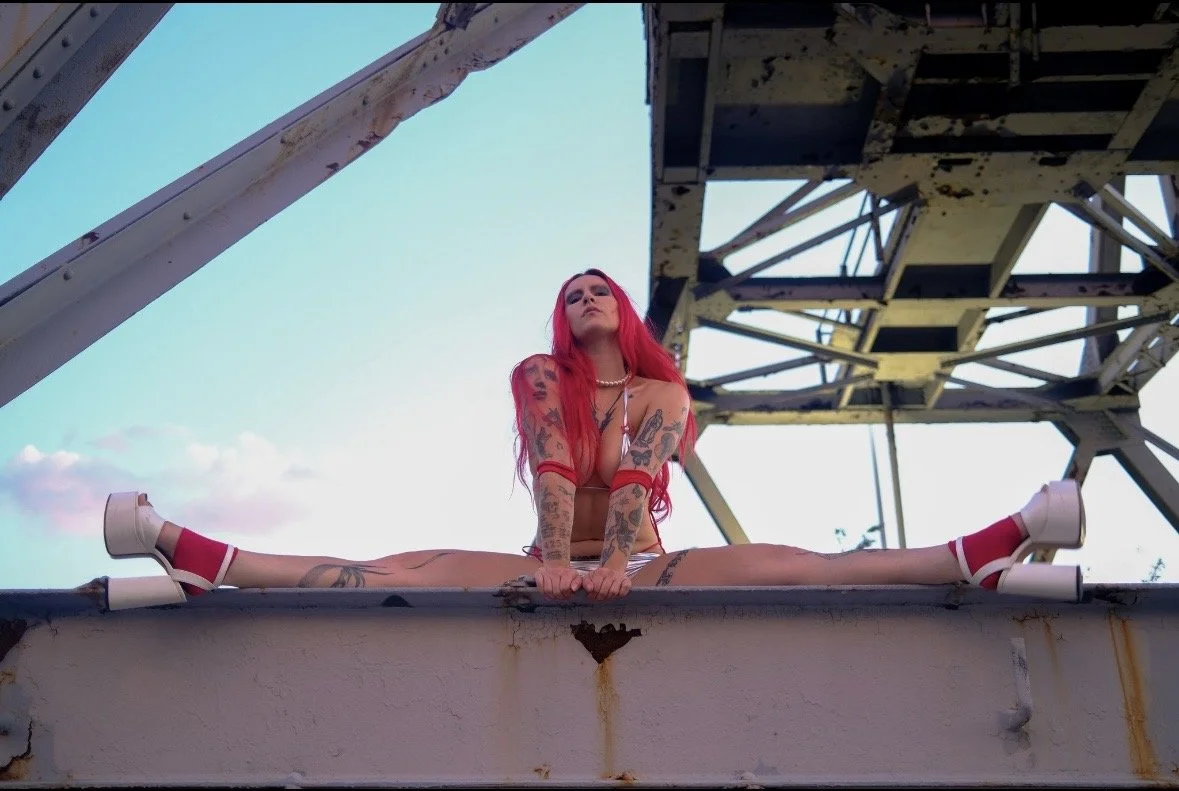
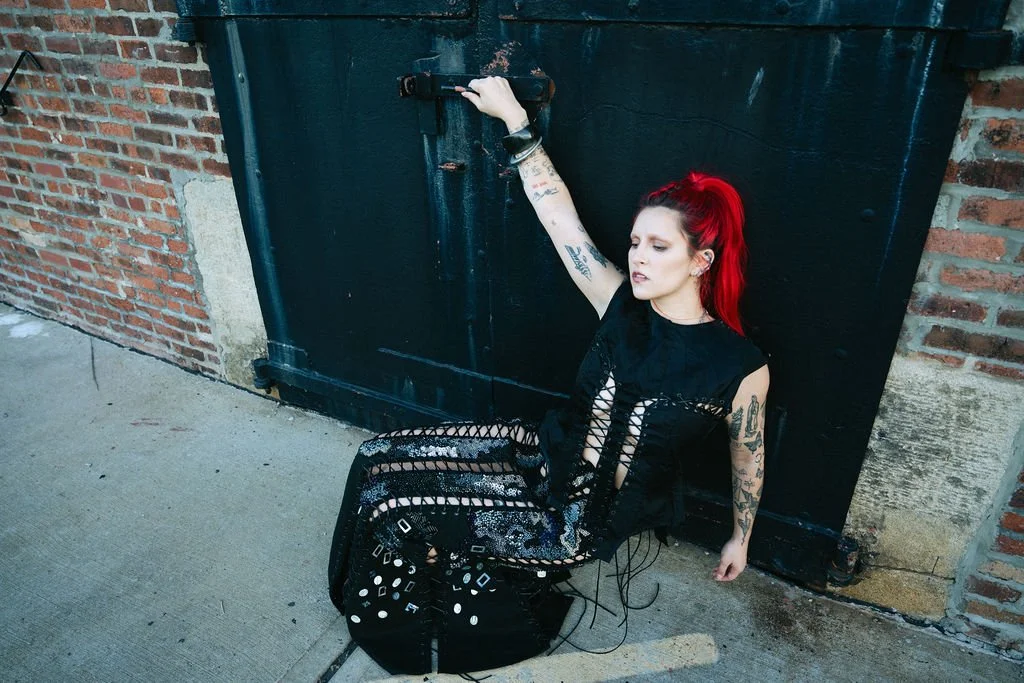
A huge thank you to the incredibly talented team that made this shoot happen:
Creative Direction, Writing:
Eva Fournel @evafournel_
Photo: Macey Keung: @spacey._.macey
Isaac James: @isaacjames
MUA: Andriy Tykhyy: @a.dopee @yunglewks
Styling: Sunny Kern @sunnyykern, Natalie Gardner @nnataliegardner
Talent: Von @von
