An Evening With destroyourfuture
by Aadi Singh and Mollie Smith. Images provided by destroyourfuture.
It is cold when we arrive at the unmarked warehouse. Two people are standing outside smoking cigarettes. All four of us are wearing Carhartt. My friend and I try one of two doors and find it locked.
“It’s the other one.”
I say thank you.
We open the door to find two more doors in what looks like a well-lit storage closet. The same pattern repeats twice more, but music is getting louder, a dull bass becoming increasingly complex until we finally emerge into the afterparty.
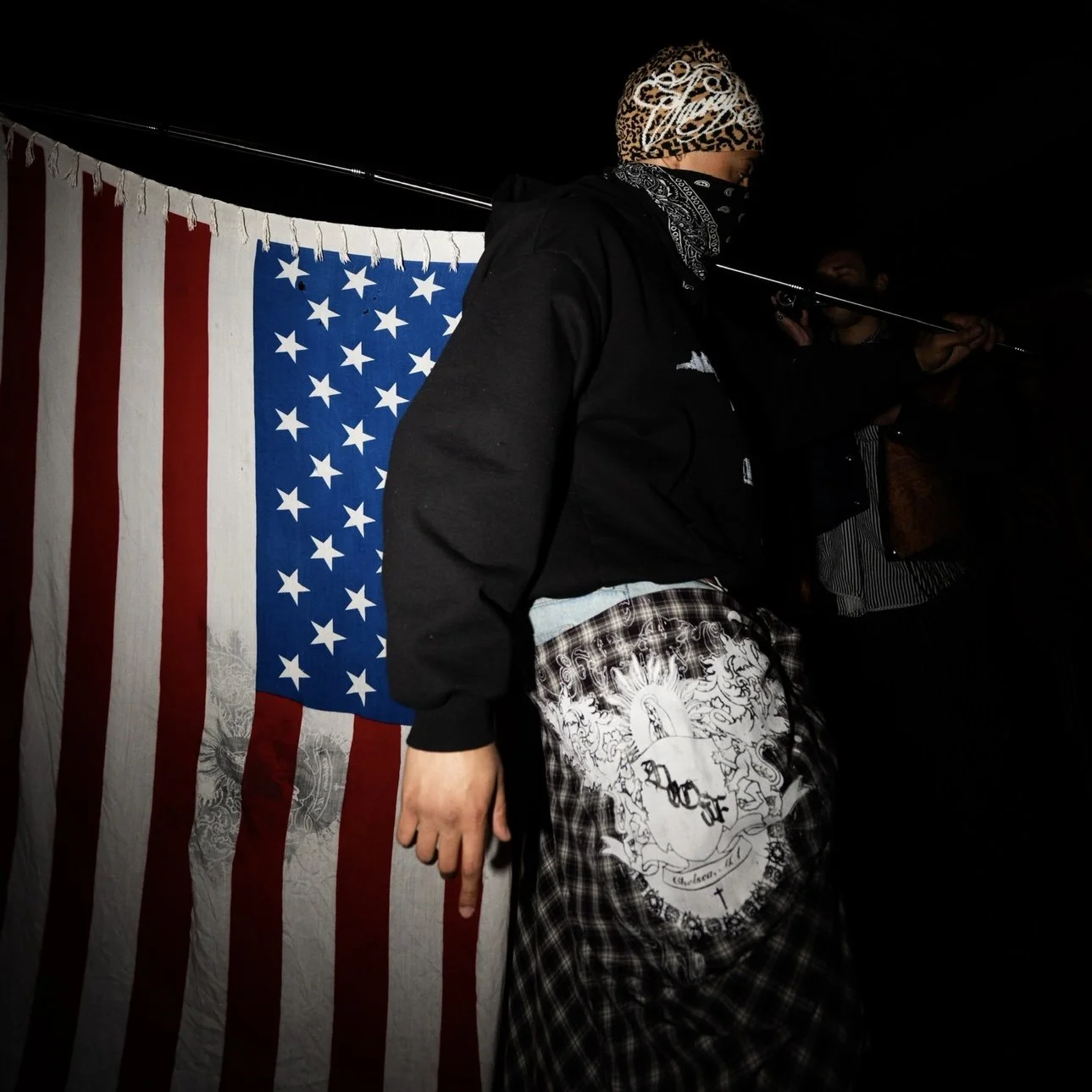
DESTROY OUR FUTURE is the brainchild of Hector Rivera, Jefferson Andrade, Malachi Roth-Cohen, and Felix Hernandez. Founded during the creators' time in college in Boston, the brand seeks to address modern society and the complexities of the minority experience within America’s contemporary political climate. The about page on their site reads:
Fashion is a performance, but it is not necessarily performative. What we wear assists in the way we navigate space and how we can connect to each other and appreciate each other. Through research and appreciation, our experiences shape how we express ourselves to the world.
Hold us tightly, we will hold you within us.

Malachi Roth-Cohen and Hector Rivera monitoring video on-set.
Talking to them, you understand how this grand vision fits together. When I met them, they were riding a high. Their newest collection, Jibaro, had just debuted to huge fanfare at Bentley Arena. My socials were awash with DOF's motifs: crucifixes, rosaries, and an overturned American flag. They obviously had a lot on their minds. I tracked down Malachi through a dense artificial fog. Industrial music was blasting by this point, and he led us through a curtain into a smaller, more private space where we could reflect on the evening.
Transcript:
Mollie Smith: What’s your name?
Malachi Roth Cohen: My name is Malachi Abraham Roth Cohen.
MS: And what do you do?
MRC: I’m production and partial direction at Destroy Our Future, and I’m curating and organizing two galleries in June and July in DC. The first one in June is at The Fridge in Capitol Hill featuring Atticus Torre, Dieglo, and myself. The other show in July is titled Resistance and is co-curated by my friends Claire Kellet and Ella Strayer, which is opening on July 3rd featuring many wonderful artists (stay tuned!). I'm a Project Manager at Boston University Office for the Arts, I'm a route-setter at a rock climbing wall, I do a little bit of everything.
MS: Tell me a bit about the show. How did it go?
MRC: The show was wonderful. It was really nice. It was really different from last year; all new pieces, whole new set. Jibaro — we’re trying to focus on a new style, last year was take it apart. We’re shifting. It’s all about Latina — Latino — expression, indigenous expression, enhancing that feeling of authenticity and originality and bringing it to a streetwear perspective.
MS: I noticed when I was doing research on DOF, Jibaro is Puerto Rican in origin-
At this point a man came in and asked Malachi if he’d saved a little kid from a burning building in the past. Malachi said yes before informing him that he was doing an interview. The man apologized for any disrespect. Hector and Jefferson also arrived at the venue.
MS: What are your names?
Hector Rivera: Hector Rivera.
Jefferson Andrade: Jefferson Andrade.
MS: How was the show for you?
HR: The show was really good. We didn’t really have many expectations considering that it was through a university, but they have lots of experience working with independent designers from all around. It was really nice to be able to work with them, and use that platform to get our project to new audiences. People really loved it. The music was great. It was a vibe. The clothes came out amazing. We’ve been working on them for months on end, and I’m just happy — I’m very grateful for all the people who were there and shared their love and opinions. I have nothing but positive things to say.
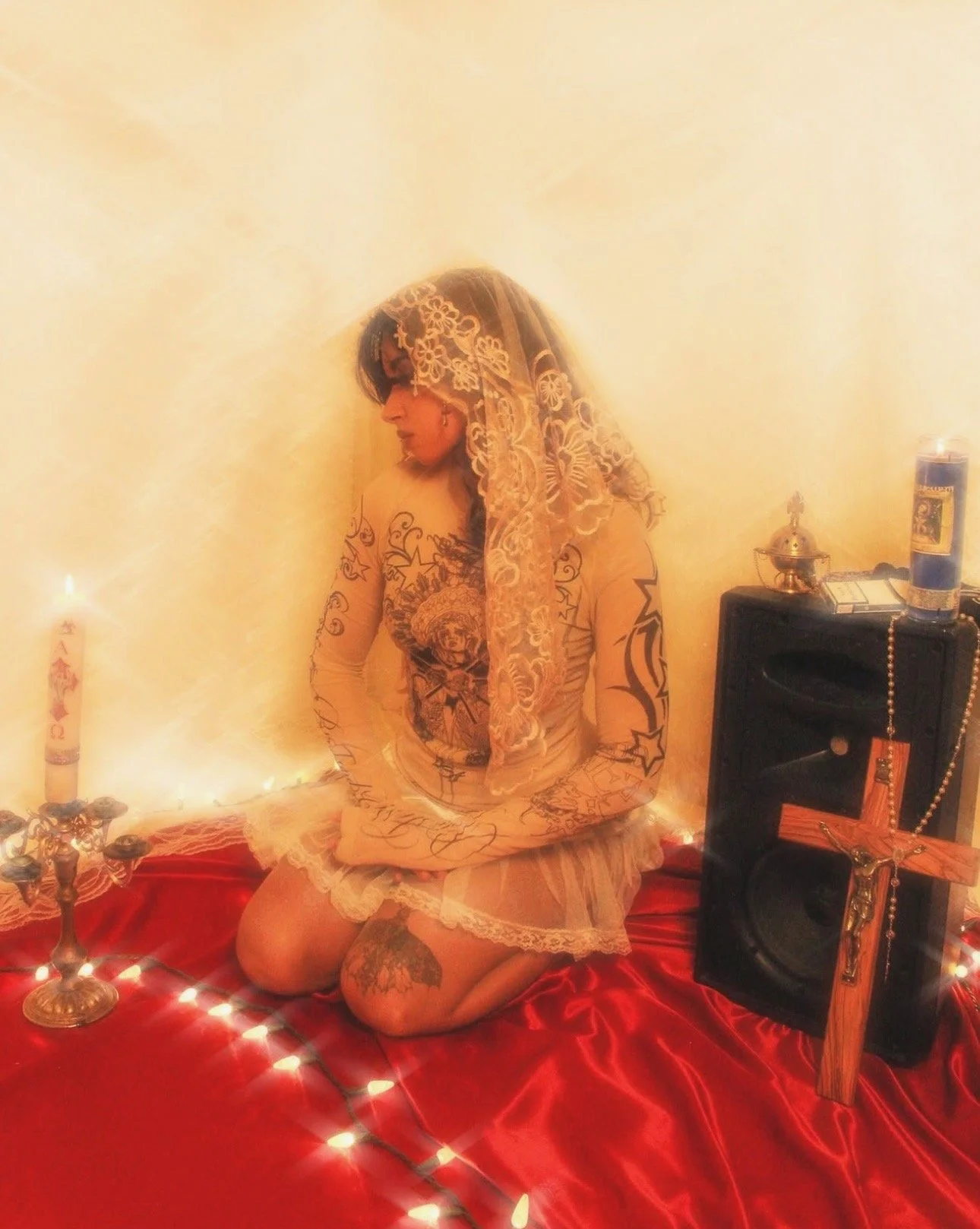
Excerpts of DESTROY OUR FUTURE’s recent collection, playing homage to traditional Catholic imagery.
MS: One thing I noticed looking at the collection and your image right now is you have repeated allusions to Catholicism, and particularly a Hispanic interpretation of Catholicism. Could you touch a little bit on that?
HR: So the brand is essentially subversive streetwear through the Latino perspective, but on a personal level I wanted to sort of angelize my experiences and my identity and taste, exploring what makes my taste the way it is through a brand and through clothing, but also creating a space and a platform for this sort of expression. So, a lot of my designs derive from things I am inspired by, but more specifically this sort of unified Latino identity across North America, South America, and Central America, and this idea of “How do we create a culture and identity? How do we create a body?” despite facing displacement, oppression, and a lack of opportunity.
JA: As you know a lot of Hispanics come from this Christian background — my parents happen to be Catholic — so it’s something that’s rooted in the culture at this point. I feel like the majority of Latin Americans that you interact with will have this family background in Christianity. I mean I personally was a Catholic myself, so a lot of this imagery really resonates with me. We recently had this collection where we had Jesus on the cross made of guns, as an example, but we also worked with our models to recreate imagery, like that of Virgin Mary. We’ll also use certain materials and fabrics for the same effect, like we use a lot of lace to represent a sort of purity, again seen on the Virgin Mary. There is imagery or set of motifs that align with our culture’s history with religion. We try to pull a lot of imagery. We even used straw hats, for example, to pay homage to Puerto Rico. There are a lot of things we take inspiration from. It’s just a bunch of different things.
MS: It definitely feels like politics are at the forefront of DOF right now, considering the contemporary landscape. What’s on your mind?
HR: Honestly, I’m very overwhelmed and dealing with guilt but also ambition, as well. All those things are clashing because, as we see in the world right now, we’re at a war that no one wants to be a part of. My people — immigrants, Latinos — are being threatened, but the thing is that the world/America/the West have been dealing with this for months and now it’s just spreading to other people. I studied sociology when I was in undergrad, so I’m always seeing the intersectionality — it’s affecting everybody in so many ways, and I feel like nobody can unify right now. But right now I think that, despite the guilt of being an artist, or a designer, doing things that demonstrate some privilege, I feel like now more than ever, people just need to see themselves, they need to find-
MRC: They need to see people in the culture representing the culture.
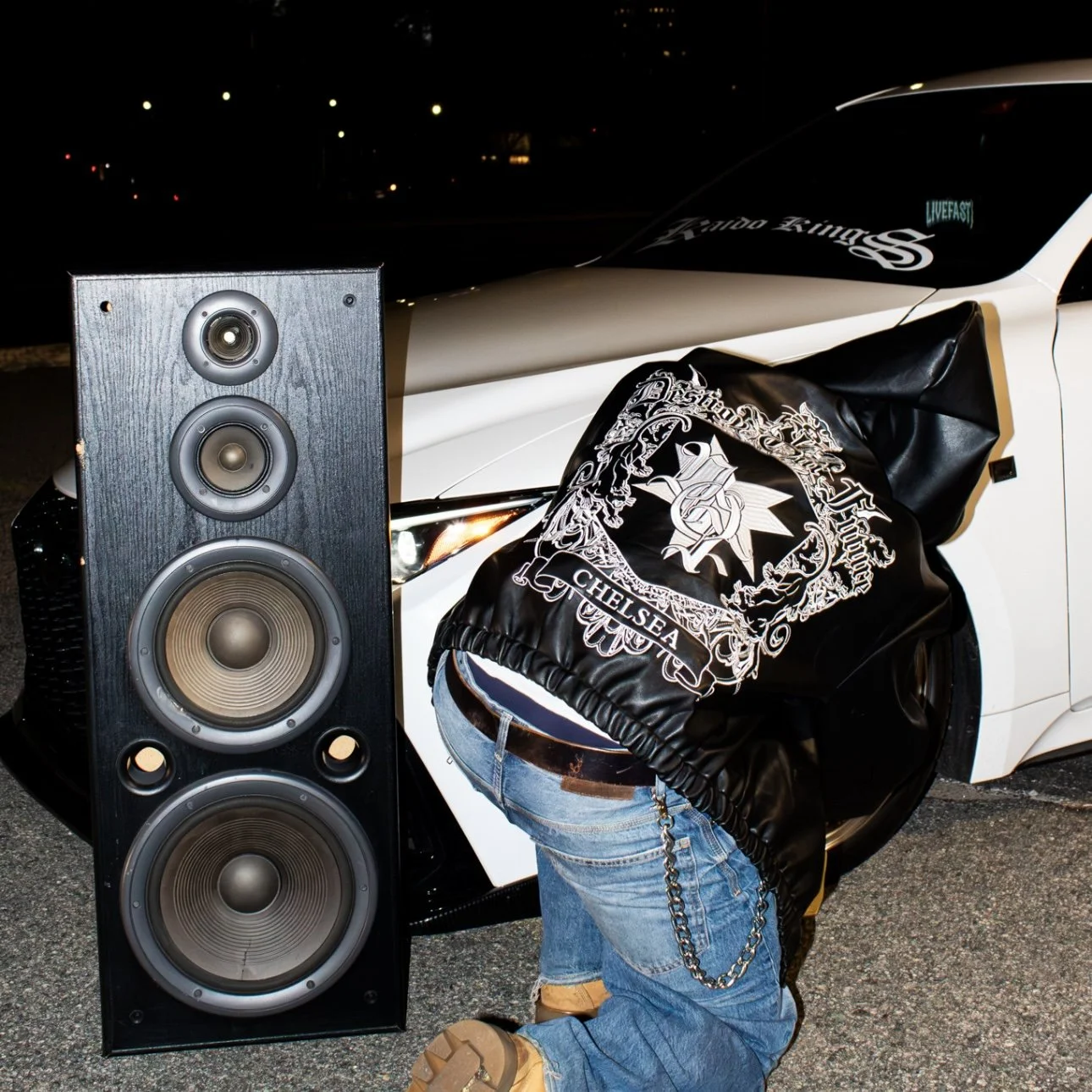
DESTROY OUR FUTURE remains heavily influenced by Latino music and car culture, reflecting shifting diasporic identity.
HR: Exactly, they need to see themselves, and feel represented. They need a little hope and to know “okay, there’s a space for me. It exists.” And although I commit heavily to the subversive, sort of punk-ish identity, at the forefront of it is people of color who have had to perform and overshine to be recognized. That’s it more broadly. As far as the allusions to Catholicism and the culture, I grew up in a Catholic household, and it’s more than just the spirituality but the recognition of my culture; of things that are familiar. What do we take with us when we have to abandon everything and start again? I feel like that’s the story of a lot of my family — my parents, my grandparents, my aunts, my uncles. Another example beyond Hispanic-Americans, you have to think about, for example, is how African-Americans had to create their own culture despite being beaten down by society and the systems they lived in, and people still have to bear the burdens of that responsibility. Starting from zero.
MRC: Getting into history, Zora Neale Hurston was born in Eatonville, Florida, and that started in the 1930s/40s. This was right when Black people were given the opportunity to start their own towns, buy their own land, have their own property, and cultivate their own cultures. They developed a whole independent manner of speech and way of being, separated from the white, European world. And that’s so important. Having cultures that differentiate in America is key. That’s how diversity really is made and represented in this world, that’s what makes it a melting pot, not just it being all white and European property owners, and people who had the opportunity to build generational wealth from the 1800s onwards.
MS: Absolutely. America’s a mosaic.
MRC: Yeah.
MS: On a more practical level, what were some technical challenges when it came to putting a collection together?
HR: Understanding where I’m at, what I’m trying to accomplish, and the amount of work that it takes to get there. I feel like in the beginning, I was very naive to how much goes into learning and executing the craft well. Wait hold on.
Hector leaves to speak to a group in the back corner of the space. A copy of Karl Marx’s Das Kapital lies open between an X-box controller and an air fryer. The voices in the other group are getting louder.
MRC: I don’t know what happened there, but going off of that — technical issues — just having time, everyone’s working, everyone needs to make money, there’s a lot of issues when it comes to development and setting time aside for it, and as a designer, Hector has the most to do because our work is dependent on what he can produce. A lot of the time it bounces between me, and Jeff and Hector on what we can put out, and what type of money we have to put toward the brand. So today was a big step for us. Today was a turning point to see what we can do, what we can organize, and who’s behind us; what kinds of people we are able to bring together. There were technical difficulties but those were small hurdles.
JA: I would say, in terms of technical challenges, since we were collaborating with a university to do the show, there’s always that distance between us and the organizers themselves. So, lack of communication, scheduling conflicts, and creative setbacks that we encountered were frustrating at points, but I think that just comes with working with a university. It was a nice setup because we didn’t have to pay for models, for example, or staging. Even with the afterparty, I was in charge of organizing everything, and it was a lot. We’re still on the rise, and we want to be ambitious and throw all these events, but there’s only so much you can do, and only so much you can invest, and only so much manpower available. So all these things combine, and it definitely can take a toll when you’re trying to put everything together. Literally after the fashion show, I had to run over and set everything up in terms of sound, equipment, furniture, and just making everything comfortable. Also there’s a question of expertise, where the sewing process and putting together garments can be very difficult because sometimes you come up with a design and then it’s like, “okay now which fabrics do we need, how much time is it gonna take, and how skilled are we in doing this?”
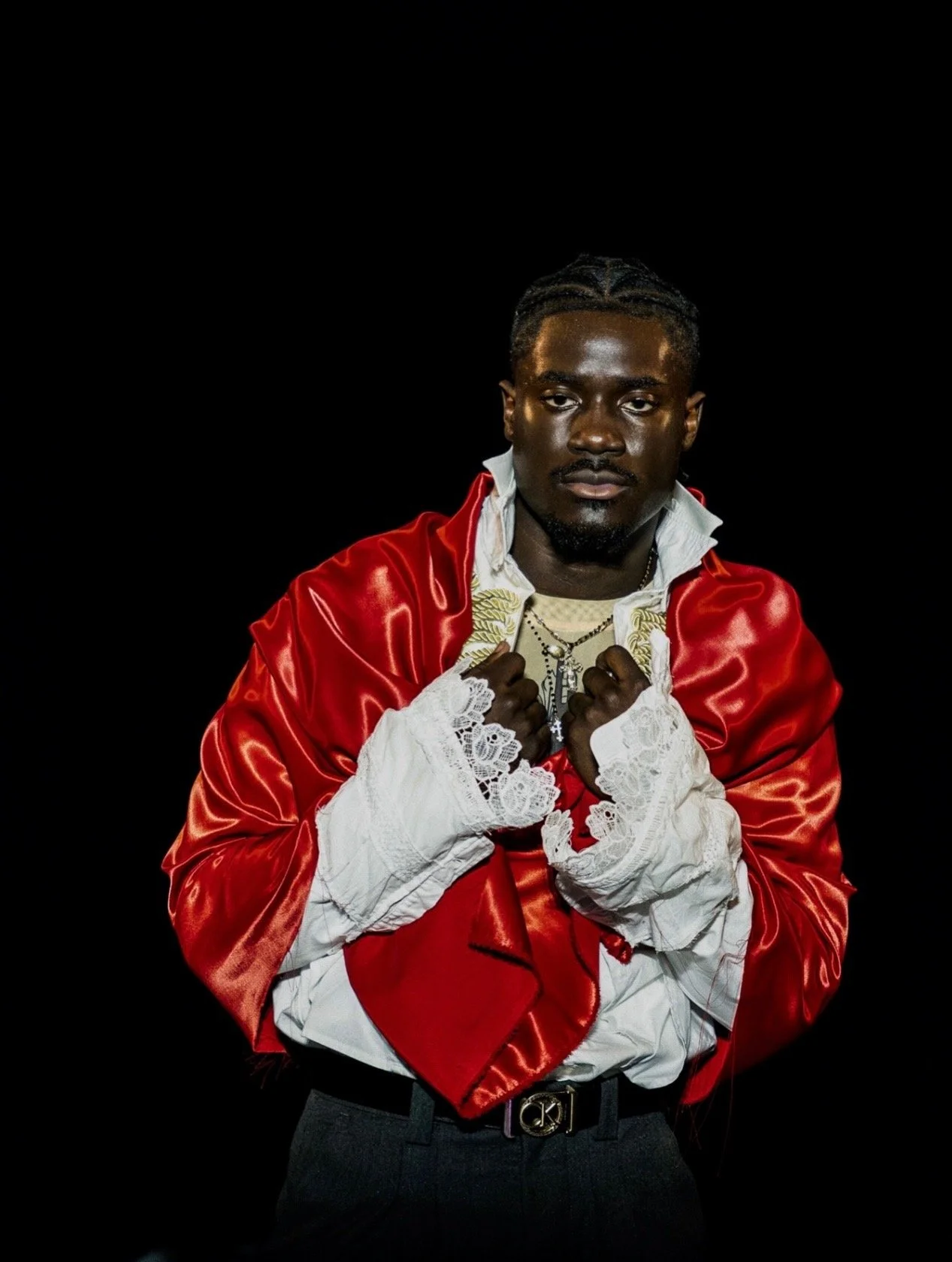
A close-up of DESTROY OUR FUTURE’s runway presentation this past spring.
MS: Do any of you have formal training? Or are you learning as you go?
JA: We’re really learning as we go, but at the same time it’s not very practical for us to sew everything. So we’ve found a nice balance where we’re able to create and then send it off to an outside manufacturer. We came into this with, really, no knowledge of how to sew. Hector picked it up and has become very good at it, so it’s been a learning process, but for the most part we’ve found our sweet spot. We can design it, and put together a tech pack,* but we can’t do everything. That was something else we picked up from this last show, like we put this much time into it, and was it really worth it? We put time into sewing and sourcing fabrics, and now you have to question how you operate the business at that point.
Hector returns.
HR: Yeah absolutely, I think even on a personal level, understanding; “Hey, I don’t know that much, but I do know enough to find a solution and put it together.” Because it’s a craft. People spend their whole lives trying to get as good at this as possible, and how to create a voice for themselves. Patience has definitely been a virtue. Forgiveness and allowing myself to fuck up, starting from scratch. I don’t want to say playing it safe, but being strategic with my resources, and understanding the higher purpose. It’s going to be what it has to be. The way it comes out, the way that I’m going to execute it, it’s going to create a result that — doesn’t matter if it’s good or bad. That provides me a lot of security.
MS: What’s next?
HR: We’re an independent brand and we’re very, very young. There’s still so much to learn, but I know my voice. It’s a strong foundation, it resonates. Right now we’re working on finding a system that’s sustainable, consistent, and reaches the right people.
JA: I feel like we’re finally finding our footing in the industry as beginners, because we’re really not even breaking the surface here, but we want to consistently release products, and create campaigns, and push these products out through campaigns and marketplaces, and just continue to build this idea of DESTROY OUR FUTURE, and the world that we want to create, and the message we want to spread. What we have coming up is a summer collection releasing in a few weeks, so we’re working towards that right now. We’re really trying to perfect how we present ourselves to the public, and we want to continue into the fall as well and release a capsule collection. So just consistently pumping things out, because at the end of the day you want to get attention and stay relevant. We’re learning that this is the idea that we need to proceed with. We’re focusing on elevating ourselves, in terms of what we’re producing, whether it’s garments or media, we want to stay consistent.
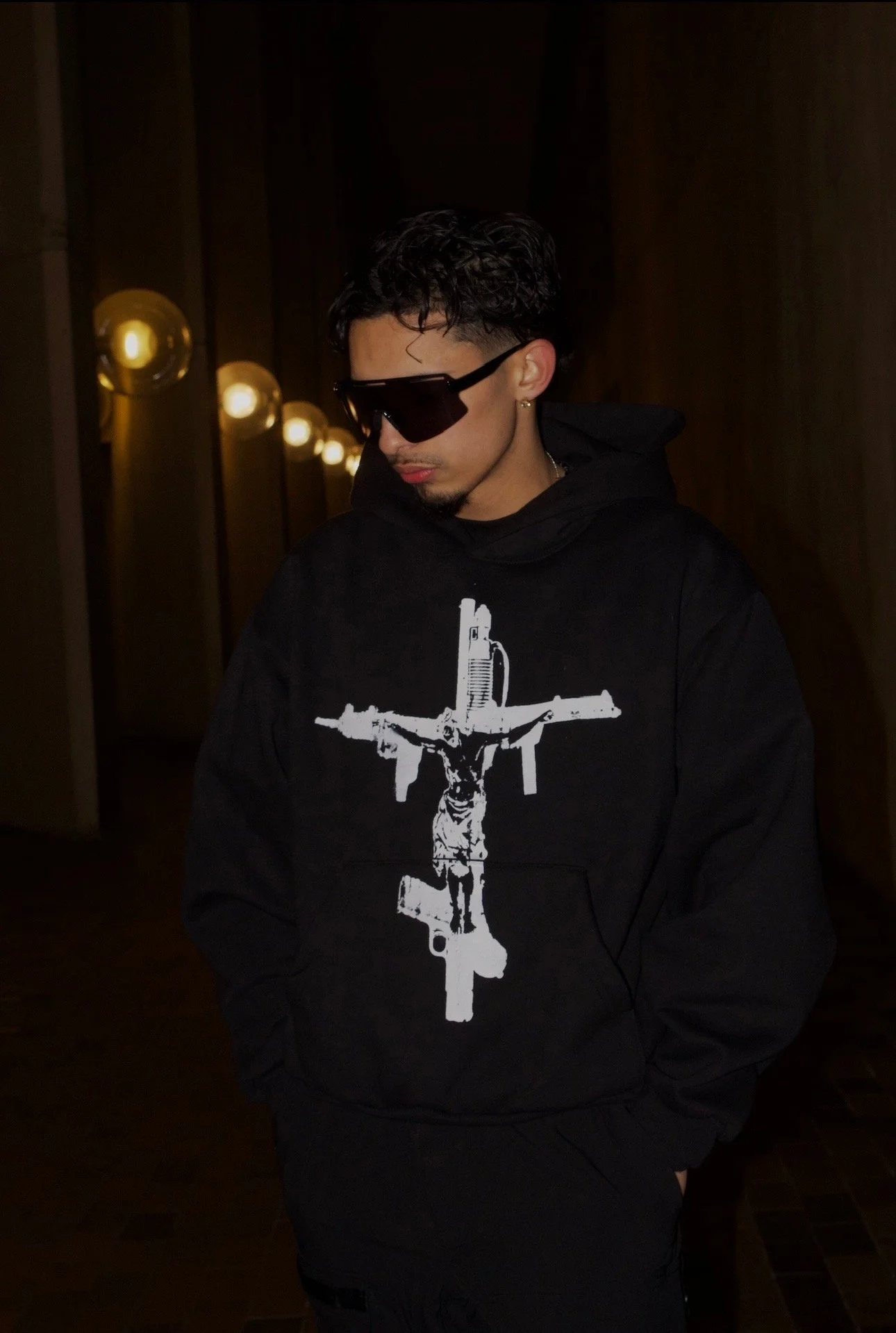
More of DESTROY OUR FUTURE’s crucifixion motif in action.
MS: So the summer collection will be an extension of Jibaro?
JA: In a sense, yes. Hector and I have experienced a lot of scenes as Hispanics. I used to take him into the car scene; that’s what we’re leaning into for the next collection, and we’ll be doing a car meet soon. We also want to do a carne asada, which is like a cookout, too. Like I said, just to lean into Hispanic culture. Also, we’re producing gym shorts too, which will be perfect timing with the World Cup. I think we’ve done well at putting ourselves in scenes, so we just want to continue and keep deepening our bonds with the people around us.
MRC: Destroy Our Future means destroying the one that’s been given to us. Fuck predestiny, fuck all this fake shit, fuck all this bullshit that the government is trying to present to us right now. We create our own future.
HR: Destroy Our Future, create a new one. You don’t have to subscribe to anyone’s story but your own.
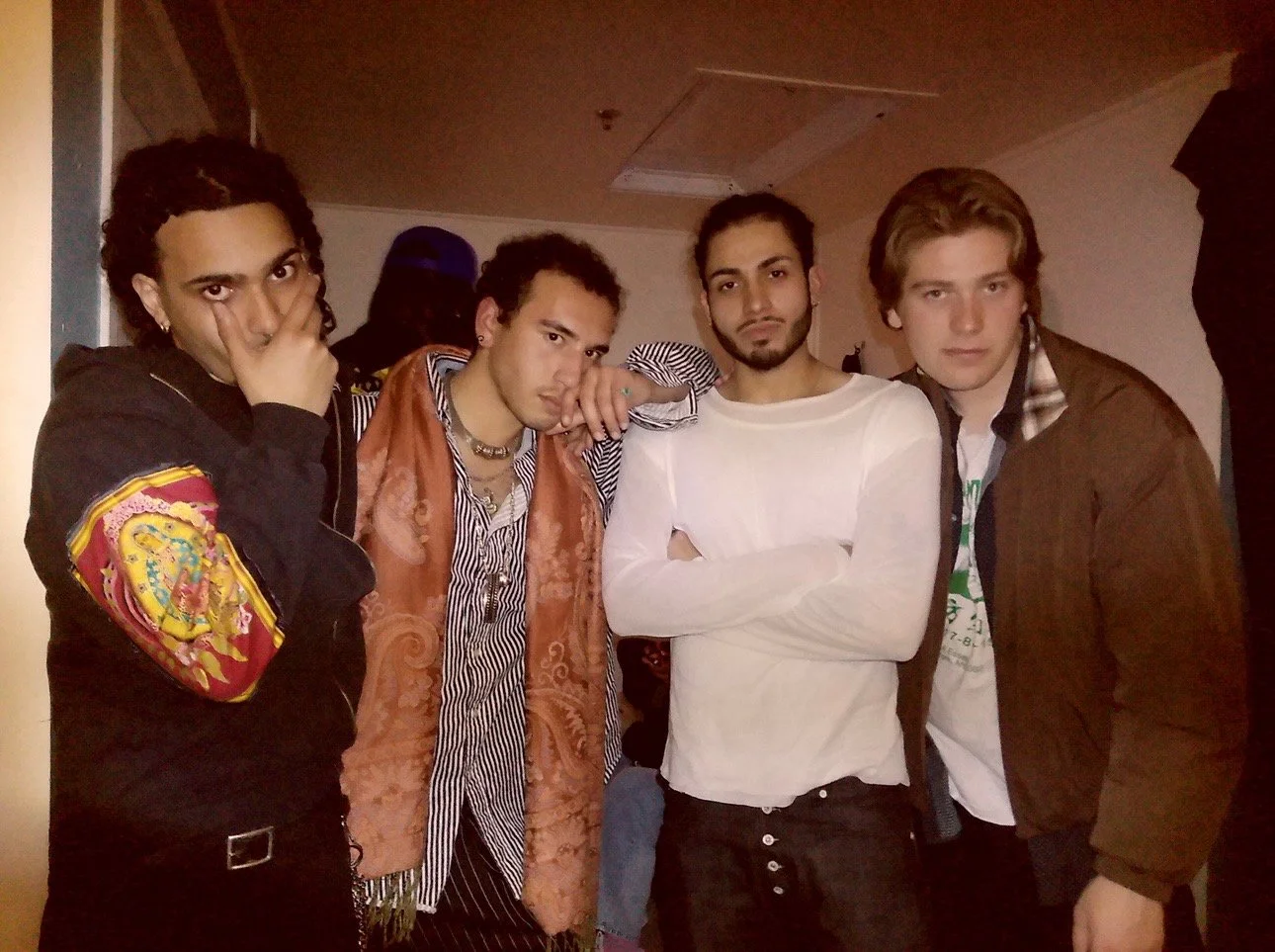
Hector Rivera, Jefferson Andrade, Malachi Roth-Cohen, and videographer Sebastian Stauber.
Editor’s Note: You can keep up with DESTROY OUR FUTURE on their website, and Instagram. The Jibaro collection was launched online and in-person at Bentley University: Ashes to Bloom Fashion Show on 03/28/26. The upcoming summer collection launches in the coming weeks. All future updates can be found on their socials.
