
Epperson on Crawford
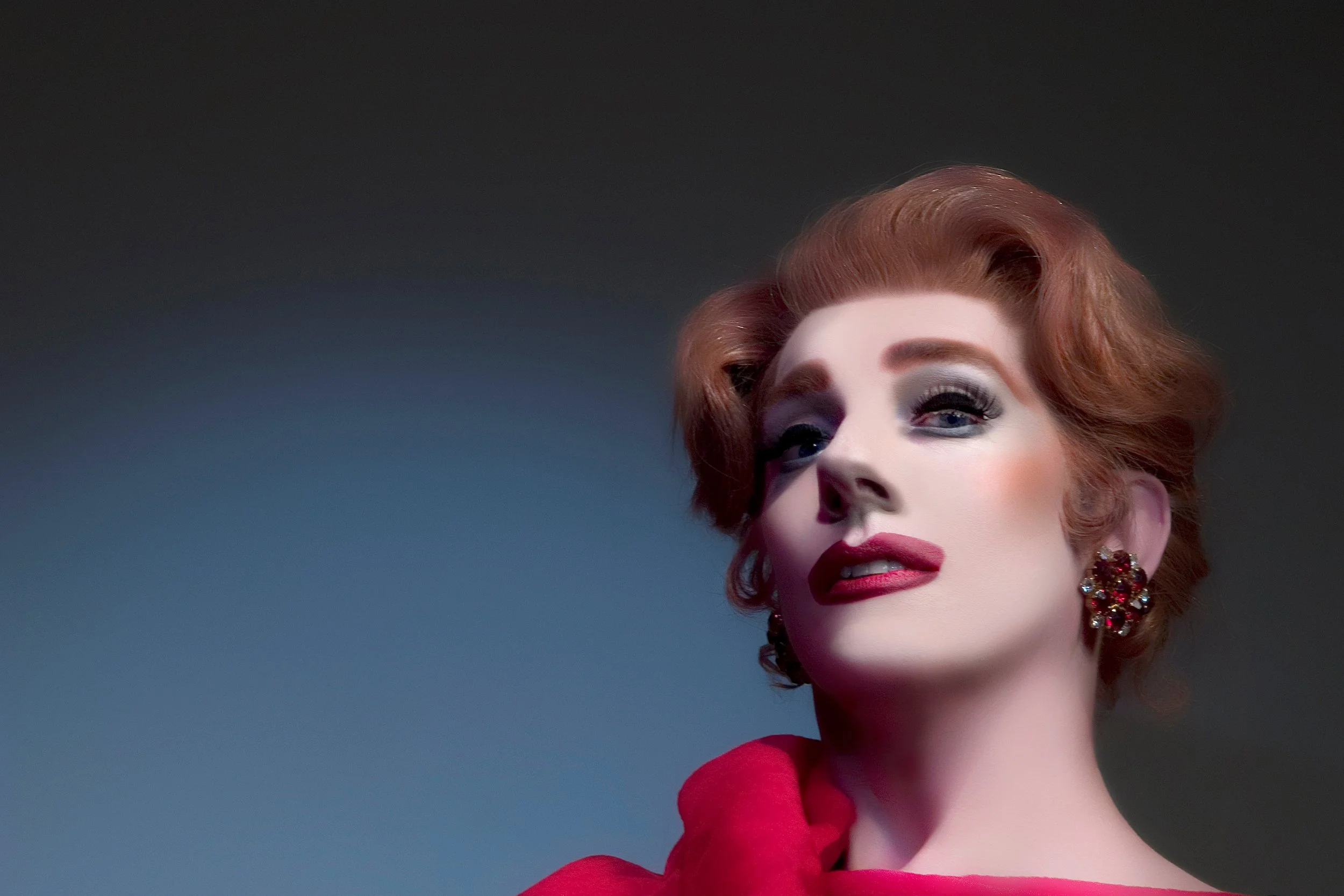
Photo by Austin Young. Words by Jonah de Forest
Joan Crawford and Lypsinka understand the power of transformation. The latter is the stage persona of John Epperson, a drag performer known for incorporating irreverent audio into his act. Epperson’s meticulously constructed performances pine the depths of 20th century Hollywood, offering a postmodern portrait of femininity at its most extreme. Naturally, one of his foremost muses is Miss Crawford.
From the outset of her film career in the 1920s, the Texan chorus girl maintained relevancy through rebirth; at varying points a flapper, a glamourpuss, a symbol of working class ascension, a consummate dramatic actress and eventually, a fixture of the “hagsploitation” genre. Even Crawford’s death in 1977 could not stop her image from undergoing another overhaul. Faye Dunaway’s histrionic performance as Crawford in the 1981 film Mommie Dearest—based on a damning memoir by the late star’s adopted daughter—caricatured Crawford as a shrieking harpy. Three decades later, Ryan Murphy’s miniseries Feud: Bette and Joan attempted to paint her in a more sympathetic light, with Jessica Lange playing a wounded Crawford in her later years. A balanced account of the enigmatic actress can be found in Scott Eyman’s biography Joan Crawford: A Woman’s Face, published in 2025.
If anyone can parse the many faces of Joan, it's Epperson. In his work, Epperson has borrowed from Crawford’s filmic backlog and invoked Dunaway’s Mommie Dearest antics, sometimes in one foul swoop. He also co-adapted the 1950 Crawford vehicle Harriet Craig for the stage and starred in the surrealist theatre piece The Passion of the Crawford.
Crawford’s latest incarnation comes in the form of Letty Lynton, a 1932 film where she plays a socialite whose engagement is compromised by an ex-lover’s use of blackmail. The melodrama has been out of circulation for ninety years due to a copyright infringement lawsuit against MGM. Letty Lynton has now returned to the fold, with a restoration of the film set to have its New York theatrical premiere on September 19 at the Paris Theater. Ahead of Letty Lynton’s return to the big screen, Epperson engaged in a wide-ranging conversation about the spectre of Crawford and the evolution of her screen persona.
Jonah de Forest: What was your introduction to Crawford?
John Epperson: My parents were movie buffs. My mother was 17 in 1945, the year that Mildred Pierce came out. She went to the movies, my father went to the movies, my mother's mother went to the movies, my mother's aunt went to the movies. It seemed like every time a family gathering took place, they would get around to the subject: did Joan Crawford and Ann Blyth actually slap each other [in Mildred Pierce] or did they fake it? So I would hear grown-ups talk about this person and, of course, they would never come to a satisfactory answer.
JdF: When did you first engage with her work?
JE: When I was seven, Whatever Happened to Baby Jane? came out. So now, in the local movie theater, I'm seeing her name on the poster alongside a cracked doll’s head. Two years later, I saw the trailer for Strait-Jacket. The overheard shot of a striped bathroom in that movie was very disturbing to me when I was a kid. It wasn't until the next year that I actually had the nerve to go sit through an entire Joan Crawford movie and that was I Saw What You Did. Two or three years later, Berserk came out in lurid color. But I was 13 and ready for anything by then. I think those early movies were disturbing to me because they weren’t about supernatural figures, they were real people. I could sit through Dracula movies because we were told it wasn’t real. But Baby Jane was about real people. It's not about oversized ants or tarantulas or things like that.
JdF: Do you think because of that, you were associating Crawford with something kind of ghoulish or psychologically unnerving?
JE: [Laughs] I think we all were, yes. And poor Joan, she went for it. You know, ‘if that's what they want, that's what I'll give them.’
JdF: I just think of how much that differs from the Crawford of Letty Lynton, who is kind of the apex of glamour and sophistication, and certainly represented something very different for audiences than she did for you in the ‘60s.
JE: In the ‘30s, the public–not necessarily the powers that be, but the public–were more innocent. The depression had caused some jadedness certainly, but in general people were probably not as well-informed and therefore not as jaded. By 1962, the world had already seen Sunset Boulevard and Psycho. Audiences were laughing at the ladies who were goddesses 30 years earlier.
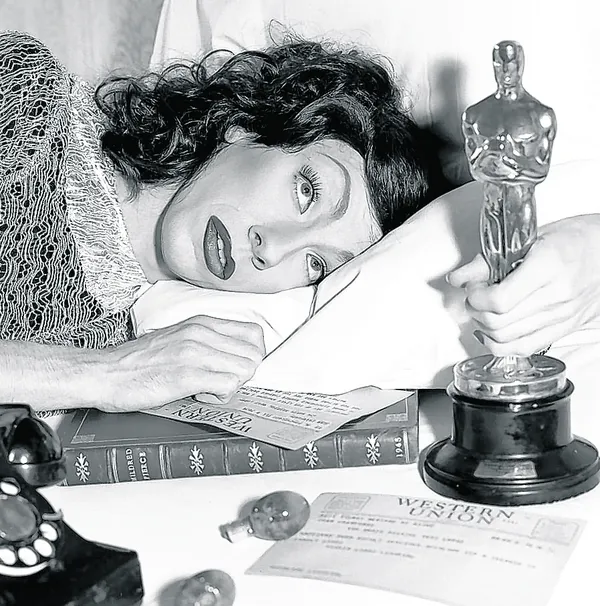
Photo by Hughes Hales-Tooke
JdF: Where do you place Letty Lynton in the arc of Crawford’s career?
JE: I don't think it's top-notch Joan Crawford. In the same year there was Grand Hotel and Rain; those are much better. But it’s not without historical interest. The clothes are amusing and there’s one sequence–I won’t give it away–but it involves a hotel suite and a bellhop and it’s very good. It was interesting to see Nils Asther, who has a kind of ambiguity about him that Robert Montgomery does not. Nils Asther was European and Robert Montgomery was American so I think that was perhaps intentional. I’m not saying that I think Europeans are automatically more complicated but I think the Hollywood filmmakers in 1932 thought that.
JdF: Robert Montgomery definitely comes across as rather milquetoast compared to the passionate, blackmailing lover.
JE: I think the best thing about Letty Lynton were the promotional stills taken by [George] Hurrell in
her costumes where she’s really treated like an art object.
JdF: When I was watching it I was very taken with her face. You’re saying she’s kind of made up like a piece of art and I felt there was a painted quality to her and she looks so sculpturesque, especially in those architectural Adrian looks.
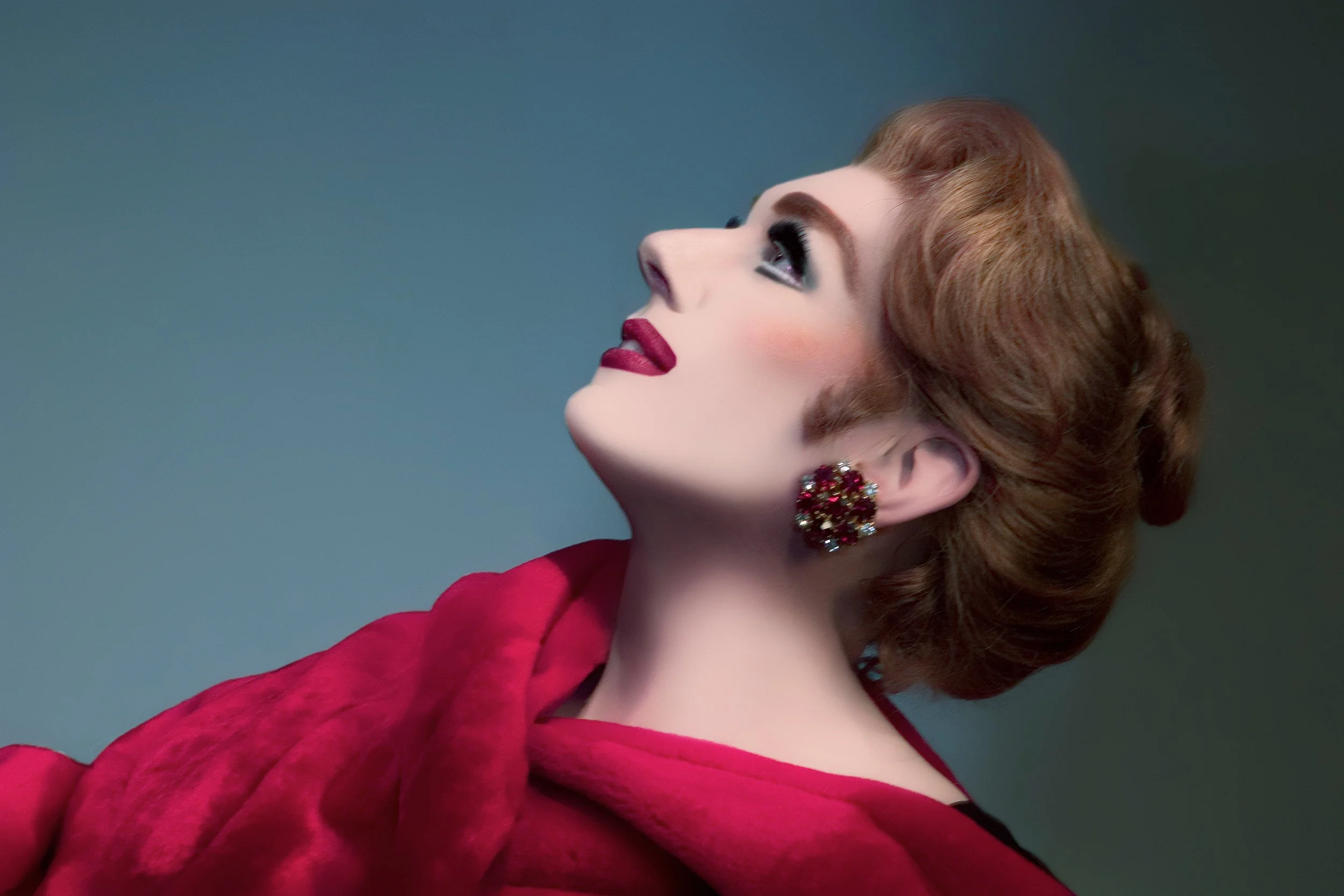
Photo by Austin Young
JE: So you've seen the movie?
JdF: I have yes. I watched the restoration on DVD.
JE: I hope the publication bought it for you and that you didn't have to buy it.
JdF: I did buy it but I’m going to be returning it.
JE: Where did you buy it from?
JdF: Glamazon.
JE: [Laughs] I won’t tell Mr. Bezos that you watched it.
JdF: We’ll keep that under wraps.
JE: Well, you know, I do speak with him everyday.
JdF: I find it interesting that this movie falls in the category of escapist fare but there’s still an undercurrent of cynicism.
JE: Lewis Stone [who plays a district attorney] is the one who delivers the cynicism in the end after Crawford kills her lover. He says something to the effect of, the rich are going to get away with it so why should I spend the tax payer money on this? Of course, we all feel that more than ever now. But that was the cynicism in 1932. We're almost 100 years later and we’re still cynical about that. Two years after Letty Lynton, the Production Code came into effect and that cynicism was stifled.
JdF: In the ‘30s, Crawford represented–if not an entirely liberated woman–then a woman living out an unconventional experience in the feminine domain.
JE: I watched an interview with Gloria Steinem, it seemed to be outtakes from a PBS documentary about Marilyn Monroe. She talks about Marilyn Monroe's victimhood and how put upon Monroe was, mainly by men. So my question for you is, why was Marilyn Monroe such a victim and Joan Crawford never played the victim? She never complained about anyone taking advantage of her. She went along with the program. If she felt put upon by men, she never said that. Is it the difference between Joan Crawford and Marilyn Monroe or is it the difference between 1932 and 1952?
JdF: I think Joan embodies the steadfast, disciplined spirit of her generation. Keep your head down, keep working and-
JE: Keep giving blowjobs with no questions asked.
JdF: Right.
JE: I don't want to insult Joan Crawford's family, but there are people who think that she was a sex worker. There are people who call her sex positive. She certainly enjoyed having sex. She wasn’t saying that in interviews but everyone knew it. When Cliff Robertson found out that he was going to be working with her on Autumn Leaves he was summoned to her home. He said, "I never had an audition quite like that one.” So, without saying it, he was suggesting that there was sex involved. In Feud, they make her sex drive kind of pathetic but I don’t think she saw it that way.
JdF: It’s curious because Crawford was rather appalled by Monroe
JE: Or at least she said she was.
JdF: I wonder what the psychological underpinning of that disdain was. Crawford projected a sexual image to some degree. But I guess it gets a certain generational divide.
JE: Yes, I think so. I have a friend who is fascinated by Joan Crawford and Joan Fontaine, so we call him ‘The Joan Queen.’ He posted something on Facebook, let me pull it up. He wrote: ‘I got to thinking that Joan Crawford has many similarities to Jay Gatsby as a self-made person who created and constructed an entirely new persona to escape their past and replace the one they were born with.’
JdF: I’d never think to make that comparison but it makes perfect sense.
JE: I have read Carl Johnes’ book called Crawford: The Last Years. He says in that book that she told him something like, ‘I've realized I don't know who I am. I think she even says, ‘You know, I've played all these different roles, but I don't know who I am.’ So it sounds to me like she was having an identity question–if not an identity crisis–at the end. She and Gatsby are both tragic in that way. But then I thought, maybe that's why we like her so much, because her identity is so complex. She had so many names: Lucille LeSueur, Billie Cassin, Joan Crawford, Mrs. Alfred Steele. When she died and Christina [Crawford] wrote [Mommie Dearest], then there was yet another identity: the gargoyle in real life, not just the gargoyle on the screen. Is that story true or not? We don't know. Christina says it is, but other people say it's not.
JdF: Yeah, that's true. Mommie Dearest gave us another sort of iteration of this ever-evolving identity.
JE: Before I forget, in Letty Lytton, I think it's after she's killed Nils Asther, she says something to him in this really vicious manner. It's the only time you see that side of that character in that movie and you never see it in any other Crawford movie until Strait-Jacket.
JdF: If someone was unfamiliar with JC and wanted to become acquainted with her work, where would you direct them?
JE: Good question. Perhaps I should interpret the question as: pick five movies to see. In that case, my choices would be Rain, A Woman’s Face, Female on the Beach—not to be confused with Joan Bennett in Woman on the Beach—, Berserk! and Possessed from 1947. I’m holding my signed copy of My Way of Life right now. The title of one of the chapters is: The Script For a Complete Woman.
JdF: Sounds about right.
JE: Chapter two is: Moving Into a Man’s World. Those chapters are in the first part of the book. Part two is called ‘Looking The Part.’ It has only three chapters: ‘Dressing For Your Role,’ ‘A Program For a Lovely Figure,’ ‘A Program For a Glowing Face and Lovely Hair.’ She’s wearing a wig on the cover of the book. It’s a wig I’ve had on my head, by the way. Did you know that?
JdF: No, I didn’t.
JE: In 1993, I was doing a show. Family members were auctioning some of her items and Entertainment Weekly wanted to photograph me wearing the clothes. One of the items they auctioned off was the Oscar she won for Mildred Pierce. So, there’s a photograph of me with that wig on my head. As big as Joan Crawford’s head was, the wig was too small for me. You can’t see in the photograph that it wasn’t pulling down completely. And there's another photograph from that with me holding her Oscar and lying in bed like she did.
JdF: How did it feel to don Crawford's wig and wardrobe? Did you feel her presence?
JE: Yes, I very much felt she was around. It was a good feeling, but a scary one too, only because the mystical is scary. I had a show that night and I used that feeling during the performance.
JdF: What was the impetus for The Passion of the Crawford?
JE: Christina was putting out a newly edited version of Mommie Dearest in 1998 and was traveling around promoting it. Marc Huestis, who was the promoter on the book tour, was someone I knew. She was coming to New York and doing an event at Town Hall where she was going to be interviewed live on stage by Rex Reed. So the promoter had the idea that the first part of the evening would be me and another actor recreating the interview that Joan Crawford did onstage at Town Hall in 1973. I’ve had that recording on vinyl since it came out and I already knew it. I cut it down from 40 minutes to 18 minutes. In 2004, I had the idea of performing the entire recording and not just the truncated version. I brought the idea to Kevin Malony, the artistic director of Tweed TheaterWorks, who had directed the Town Hall performance. It may have been Kevin's idea to begin with, I’m not sure. The movie The Passion of the Christ had come out so we came up with The Passion of the Crawford. That second ‘the’ is the most important ‘the’ that was ever in any title.
JdF: How did you approach playing Joan?
JE: I knew I didn’t look like Joan Crawford and I didn’t want people to scoff and say, ‘Does he really think he looks that good?’ So I thought it was better to take a surrealist approach and suggest Joan Crawford and not be an impersonator. I still don't see myself as a Joan Crawford
impersonator. So that meant, instead of seeing her as a human being, having her as a surreal figure was the notion. I didn’t want an animatronic recreation.
JdF: Would you do another Crawford-centric project? There seems to be an appetite for it.
JE: I’ve had the idea to do Joan Crawford: The Opera and then I thought, well maybe it’s Joan Crawford: The Ballet. But maybe it’s both. I once saw Kenneth McMillian’s ballet version of Isadora where he had a ballet dancer as Isadora and an actress speaking lines as Isadora altogether onstage. Why couldn’t there be a singing Joan Crawford and a dahn-sing Joan Crawford?
JdF: I like the idea of having multiples of Joan who perform different functions and represent different facets of her.
JE: I suggested doing Joan Crawford: The Opera to Adam Guettel and he looked at me like I was out of my mind.
JdF: What do you think Joan Crawford would make of Lypsinka?
JE: Well, I like to think she would be okay with it all. Dolores Gray was okay with it. A friend said yesterday that I had used Dolores' "essence" to inspire myself. Maybe Crawford would have seen that. She had friends who were okay with it. Designer Michael Vollbracht, for instance. Charles Busch has said that if Crawford was alive, we would be her friends, and I guess that means being up in that apartment and playing backgammon and laughing at the world.

