
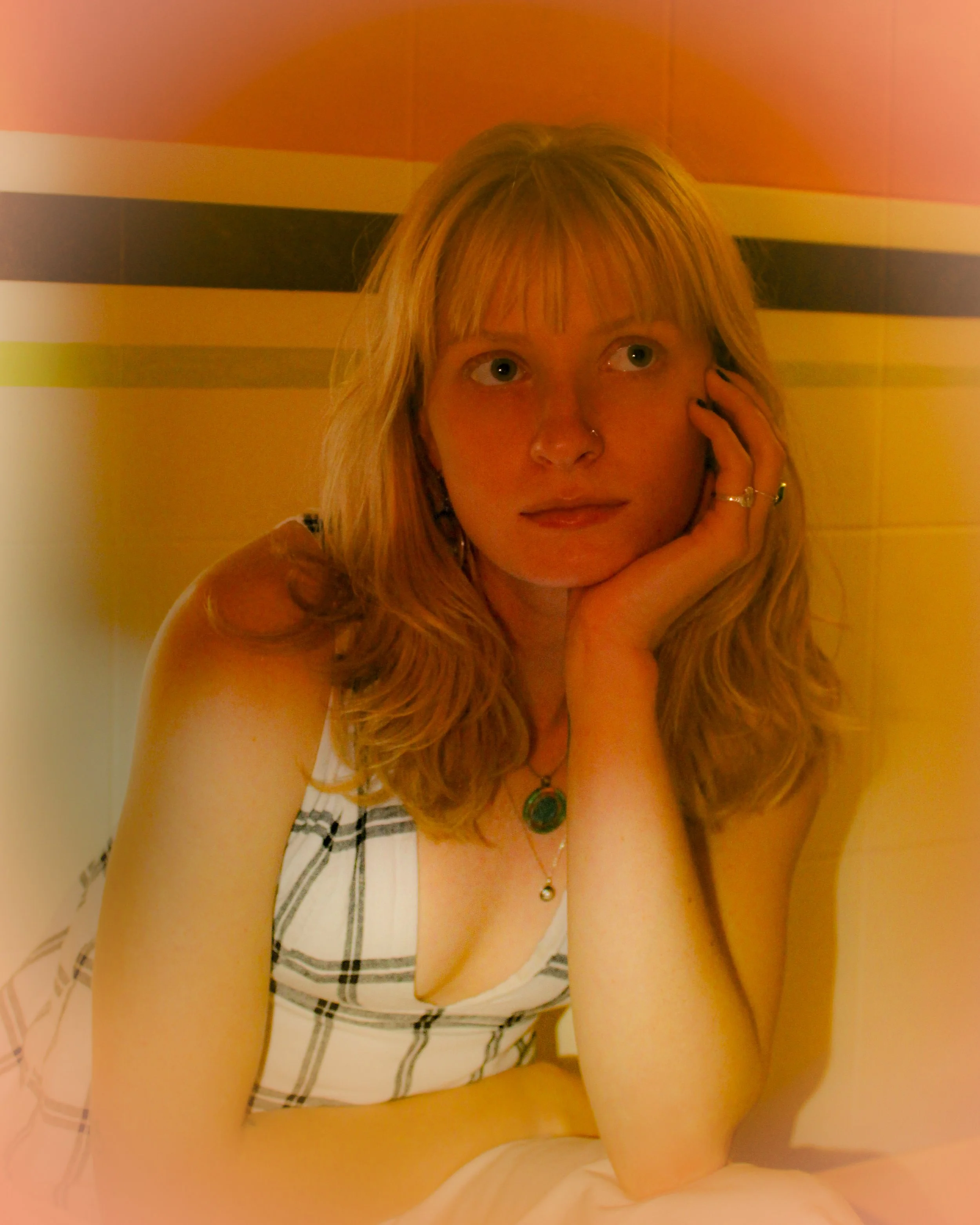
Article and photos by Mikayla J. Yurman
Speaking with emerging songwriter Caroline Tanner, nothing feels off-limits – not false starts, not fear, and not quiet victories that have shaped her work.
From Ohio to Nashville to New York, Tanner has rebuilt herself more times than most 20-somethings ever have to, and each recalibration is clear in her writing: tender, narrative-driven songs that sit somewhere between confession and catharsis. In a world that seems to value pandering to the algorithm over genuine expressions of individuality, Caroline Tanner is a breath of fresh air. Her sincerity carries through not only in her voice but in the way she speaks about failure as a kind of fuel, and as she writes with narrative clarity, emotional nuance, and a deep respect for the listener.
Her stage presence commands your attention while simultaneously inviting you to reflect on what it means to be a musician today, in an era where creativity is routinely filtered through a digital haze of metrics and forced expectations. Her writing is vulnerable yet sharp, intimate yet expansive, the kind that lingers long after the final chord. If you’re yearning for a moment that anchors you in the present, one that quiets the noise in your head and reminds you that everything you’re feeling is, in fact, deeply human, you might want to save the date for her show at Pianos on Jan. 27, or at least get your hands on her EP Through The Valley.
Come with us as we discuss self-doubt, the writing process, and what it means to find yourself in a world determined to flatten complexity into bite-sized content. What emerges is a portrait of an artist learning to trust her voice, honor the messy beginnings, and believe in herself again and again.
Mikayla Yurman: What's the last song you listened to?
Caroline Tanner: The last song that I listened to is Endless by Pinegrove, the live version specifically. It has this — you should listen to it – it just has this feeling. It's about being really sad and feeling like you're gonna be in it forever and it feels endless. The whole chorus is just him repeating 'endless'.
MY: Are there any musicians whose sound or modes of writing inspire you?
CT: My favorite artist and biggest inspiration in the whole world is Jason Isbell. He grew up in Alabama, struggled with addiction, I'm not gonna equate my experience to his experience, but he also just, like, failed in a lot of ways. He writes about failure and I think the failure is what makes him such a unique and sharp songwriter. He also has a narrative arc to every single song. He’s just one of the best songwriters, I think, of our generation. There's Neil Young, who is really inspiring to me too. He's just so simple in what he writes, but it's so poignant and effective. I'm also really inspired by a bunch of authors, I guess that more so inspires my writing but I do find myself wanting to steal lines from Shakespeare or something and just put them into songs.
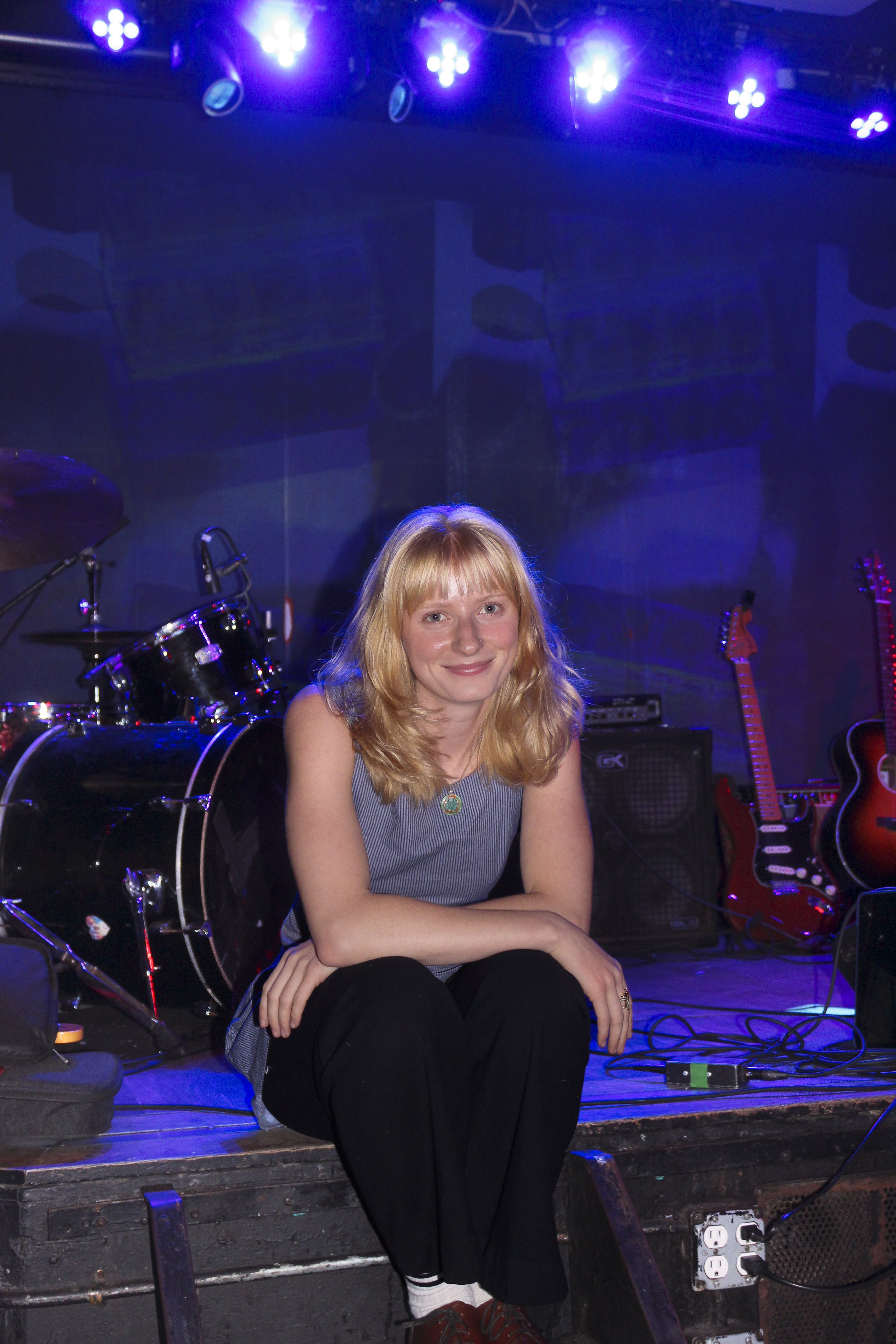
MY: Awesome. Well, first I want to talk about the show, which was incredible by the way. I really loved that when you introduced your band you chose to say why or how you met them. It felt so in line with your brand – being engaged with every aspect of the music making process, and so down to earth. So tell me more about these people and how your band came to be.
CT: [laughs] It's kind of funny, actually. As I was doing that, I was like, 'Why am I doing this? No one ever does this.' but I do have a fun story about how I met each one of these people, you know? My fiddle player, Jimmy, I literally met on Facebook. I was really wanting a fiddle player, but they're kind of hard to come by in New York. So I made a very frank post that said, I really want to do this show. Jimmy was the only one that answered where I was actually intrigued. Mandy, my drummer, was in the same abroad program as me and it was kind of me and Mandy and my roommate Zuri against the world. Everybody else was so... They were great, but like, we weren't gonna, like, go to the gay club with them, you know? Like me, Mandy, and Zuri, we're gonna go to the gay club together.
MY: As you should…
CT: So, Callum and I met in a songwriting class last fall, in the first songwriting class I'd ever taken. We met in that class, and it was really just a workshop, a learning through doing kind of thing. So Callum and I got partnered for this prompt: 'write a socially conscious or political song.' We ended up with Sadie Dear, we played it at the show and it’s on my upcoming album. We imagined it as the relationship between a father and his child growing up in a really small conservative town, the kid is assigned female at birth, grows up, and comes out. We didn't want to decide what their identity is after they come out, but ultimately, the father pushes them away. The song is about him reckoning with that and realizing he made mistakes but not knowing how to fix it. Anyway, that's how I met Callum.
MY: Fantastic, can you tell me about Michael?
CT: Michael was my boyfriend's co-worker's former roommate.
MY: Holy shit. So New York.
CT: I know, it's so New York. We met because my boyfriend at the time was talking with his co-worker, Harry. He showed him some of my music and Harry was like, 'This is fantastic. We've gotta jam.' So then we go over to Harry's apartment and then Michael's there, and Michael's like, 'We should write together sometime.' and we started doing exactly that.
MY: That's so sweet. It’s so wonderful how you have such distinct and personal meet-cutes with each of them. So you said with Callum, you met in your first songwriting class.
CT: Mm-hmm.
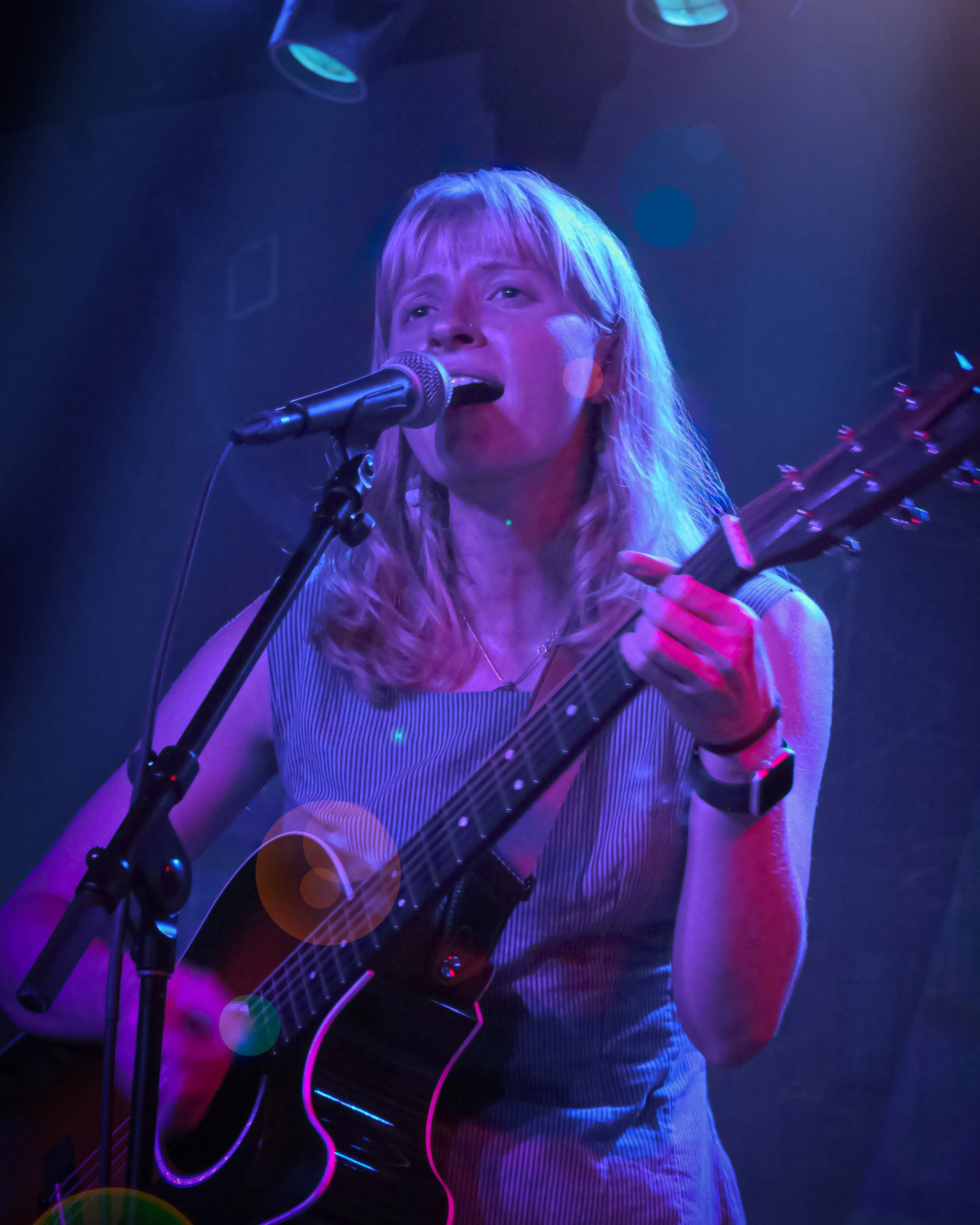
MY: So it was your first class at NYU, you were in Nashville for a little bit before that, and you spent time in Ohio before that. I feel like you've grown into your identity as a musician through these different places. I'm just curious, how do you feel like each period of your life has affected your music making and creative process?
CT: I think this is a fantastic question. I've had to just, like, completely restart my shit more than most people at this age.
MY: Yeah, absolutely.
CT: I took a gap year after high school and that gap year kind of was born out of a massive identity crisis.
MY: I mean, I feel like, post-COVID everybody was, like, restructuring. Especially, being a young person at that time and knowing everyone was expecting you to start something new, like going to college, felt so crazy.
CT: So insane. I would summarize my time in Ohio as being the two years where I realized, I don't really know who I am and I don't know how to figure that out, but it's really important to me that I do figure that out. So I just made a very rash decision not to go back to Kenyon [College], then I kind of just found myself in Nashville and suddenly I had to be an adult. I found an apartment by myself and hopped back and forth between a couple different jobs. Nothing felt good, you know, I had no idea what I was doing. That year of my life actually came up with my creative writing professor the other day, because he said that my writing has a depth that most of the other students don't have, and I was like, 'Well, I think it's a product of failing really hard at things.’ And that time in Nashville was like me trying so many different things and none of them feeling good. But it was also the time when I started writing music.
MY: Ok, so I would not call that a failure. That's not a failure at all!
CT: No, you’re right. But it was born out of this, like... isolation and not knowing how else to communicate the way I'm feeling. I came to the realization that music is something that is really important to me and it's something that I've not really allowed myself to explore, so Nashville is where that kind of came back out. But of course, the Nashville music scene is full of the best musicians you've ever seen, so, as someone who's just like a burgeoning little songwriter, it was really scary.
MY: But you were already there dude, like, you were doing it, you know? You were experiencing it. I feel like that's where you get this depth. You have this insane work ethic and drive to figure things out and you keep putting yourself in these situations that are not necessarily the end-all be-all of getting these answers or whatnot, but they keep propelling you to that.
CT: Totally. And I think that work ethic was instilled within me from a very young age. My dad was a military guy, so we’re a very driven family in that way, it's always been success-oriented and career-oriented and achievement-oriented. I kind of had to flip that script and be like, well I can't be any type of successful until I’m happy, you know?
MY: Absolutely.
CT: Like, I could, like, be making all the money in the world and it wouldn't fix anything, you know?
MY: Yeah, you'd still have that feeling.
CT: But then coming to New York, it was like... I guess a third new start, you know? I didn't know anybody at NYU when I came here, and it was really scary. The first year sucked, honestly. New York is a lot to get used to. But I think I did give myself more permission to try things and fail at them but be okay with that. I had to recognize that I want to pursue music. I want to be humble about it, but I also want to believe in myself.
MY: Absolutely. I mean, so many people, myself included, get stuck underselling ourselves.
CT: Yeah.
MY: And if you are trying to make something of your talents and passions, you can't get caught in that. You need to know there can be grace in appreciating your talents.
CT: Over the summer I had this conversation with a guy that runs a record label in my hometown, and I asked him 'What is the number one piece of advice you would give me?' And he just said, you actually have to believe in yourself so hard until other people do. I think that's where part of my hesitation in releasing this album came from. Like once it’s out, then it's really out there. And what if this isn't the best first impression I could make? And like, first impressions are crucial, so important, you know? It's just so hard not to get caught up. Especially in the TikTok world, where everyone's like, the first three TikToks you put out are gonna make or break your career.
MY: Well, I was thinking about that because it seems like if you want to be a musician, if you want to be an artist, if you want to be any sort of creative, you have to curate your online presence carefully.
CT: You have to be viral.
MY: Yeah, and you have to be doing it every day. You have to be just producing mass quantities of content to get people to be slightly interested. And that’s a job in itself! Trying to add that on to something I feel like is so scary. How do you feel about that?
CT: It sucks. I think the way that I've been approaching it is by posting, like, two-minute videos on TikTok. And that’s not playing into the algorithm. The thing that I'm really struggling with is, like, how to distill a song that I feel like every single word is important into six seconds, you know?
MY: Absolutely. Your songwriting is storytelling. You can't distill that, there's no formula.
CT: We got to get through the whole thing to get through the whole thing. It's hard. It's really hard. But that is definitely something I really try to focus on in my writing, I like having a narrative arc to a song.
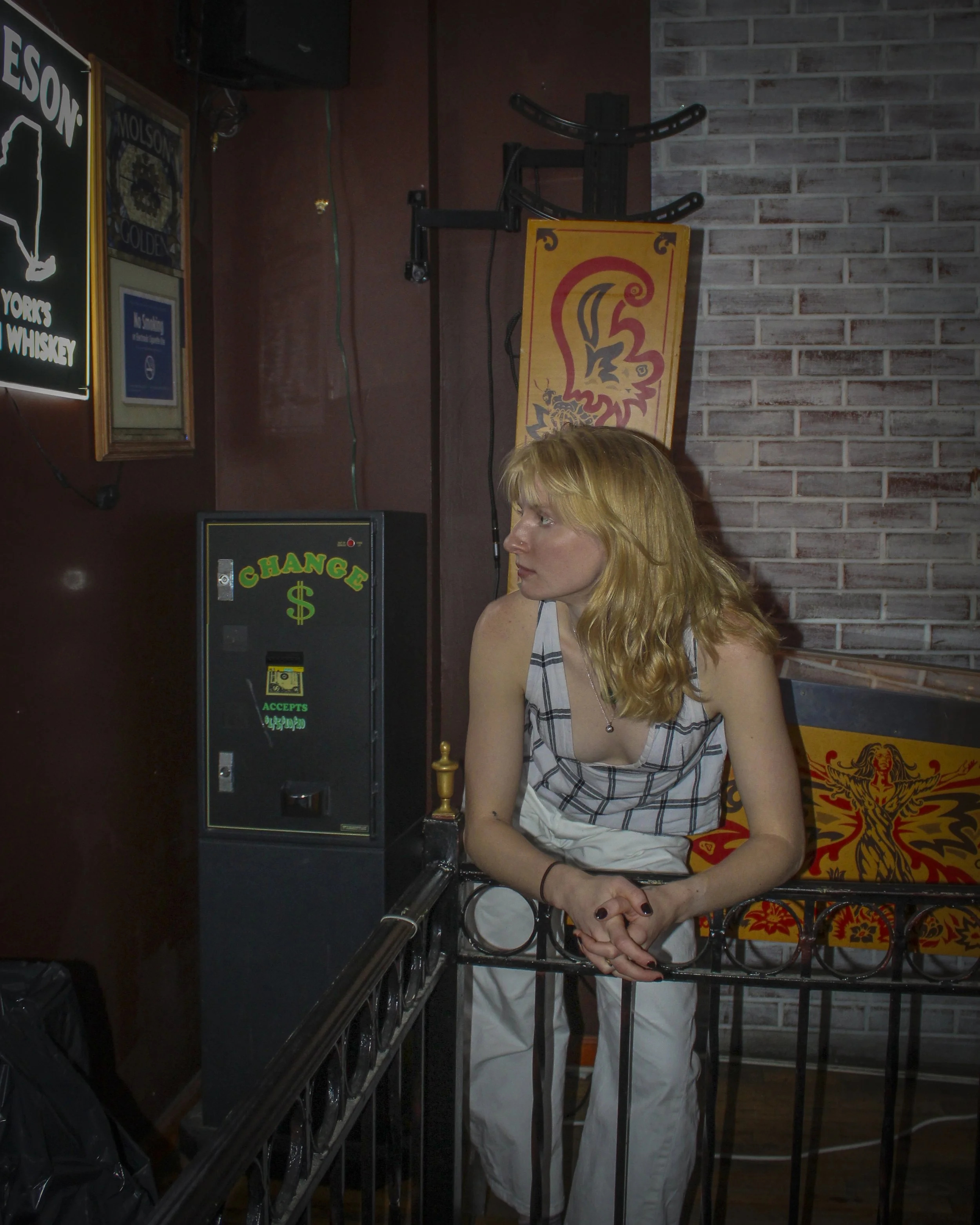
MY: Well, then tell me about that. Tell me about writing this album.
CT: The EP is four songs, The first one is a song called Through the Valley.
MY: Yeah, love that one.
CT: That one actually came about in kind of a funny way, I think. I had two ideas, I had a chorus idea and I had verse ideas. I was really liking both of them but I hadn't thought about them in a while. And then the summer before I transferred to NYU, I was working on a farm. The nature of just getting down in the dirt and working with your hands makes your mind go places. I don't know how but the two ideas connected and then I just heard the song like in its entirety, I got home and I played it and I was like, 'Holy fuck, this is a good song!' Like this feels really good to play and it feels like me. With every song I write, I genuinely understand myself better. I feel myself filling up. Like, I used to feel so empty. Through the Valley is kind of about leaving Kenyon and not knowing where to go, just aimlessly wandering. I've done a lot of aimlessly wandering in my time.
MY: But maybe this is the aim.
CT: I know. And in Nashville there were so many nights where I was just so lonely and so scared and I would just, like, go out in my neighborhood and walk around, like, until I got tired. And then I would come back home and go to bed. That's where that comes from.
MY: Ok that’s track 1. Hit me with track 2.
CT: Tell me is a song that I wrote this past winter when I was in the depths of this whole, 'What have I gotten myself into?' mindset. And in my relationship, I was at a point where I was asking for reassurance somewhat constantly.
MY: Yeah, been there.
CT: And it never worked.
MY: Obviously. Yeah.
CT: You hear what you need to hear but it's just like, in one ear, out the other. It never helps. So I wrote Tell me.
MY: This fruition story makes sense cause yeah, that song makes me cry.
CT: Yeah, that was one that came out in like half an hour. I think it's about … well it's about looking for reassurance but on a deeper level it’s about realizing that like nothing someone else could have told me would have fixed the place that i was in and I just had to change the way that I talk to myself if I want things to change. I was just, like, speaking so negatively to myself and still being like why am I not happy? So I think that song to me now is like a reminder of that idea that you can't be passive in your like mental illness and it's so easy to be passive in your mental illness. It's terrible. It's so, so hard to watch yourself be in that place. Still, like, I'm not out of that world.
MY: I mean, no, it's a constant. But it truly is the self-talk, you have to work for it, and it feels like a lie for so long, but eventually, it sounds less silly and you hopefully start to believe it eventually.
CT: You don't have to do it all the time, you know, just in moments when you catch it. I honestly started with the small things, like if I keep thinking that this project is going to fail, then it's going to fail. And it does make me feel better, you know? Anyway, that's Tell me. Sadie Dear is next, the one that Callum and I wrote together. And I just thought that was one of the most beautiful songs I've ever written. It was born of such a nice partnership, I don't think any line was written by one of us or the other. Everything was a collaboration. And that's just a really lovely song.
MY: Even as myself, who has not lived that experience, this is so poignant, it makes you feel something. That's hard, I don't get that from a lot of music anymore. I have associated memories, sure, but to have your music evoke something completely new, is impressive.
CT: I don’t just listen to songs and be like ‘I feel so sad’. But there's the idea that someone could have actually experienced this story, and even in Tell Me, it’s really hard for me to perform sometimes I can feel it so deeply. The first line is ‘I tell myself this body ain't my home’ sometimes I’m just like, yeah, it really does feel that way and I know that other people have said that exact same thing to themselves.
MY: Absolutely
CT: And then the last one. It's called Fanning The Flame. This one is like a very true story about how, right before I came to NYU I started this relationship and we always knew that I was going to be coming here in the fall and he didn't know what he was doing. So we had these really beautiful two months just knowing it was going to end. We thought it was going to be a lot easier to let go of each other but it was devastating. I guess I couldn't shake that idea that I really just wanted to tell him that I loved him and wanted to feel brave in that sense. and so the whole song is just like a reflection on that and about being together, knowing it was going to end, and then trying to let go.
MY: That's beautiful.
CT: That was the first song I wrote that was like, important in a different way you know? I’ve tried to make more of an effort not to write my classic sad, mid-tempo, reflective songs. I love them and they’re important but I can't do that forever, you know?
MY: No, and I think, that’s what was so enjoyable about your set, you just have this really stunning mix of sounds. You have the slower songs where you really are hanging on to every word and then you have something a little faster and that makes you want to dance a little bit! I think to have songs that are distinguishable speaks to your ability as a songwriter and just a writer in general honestly.
CT: I think that’s something that I've been trying to keep in mind recently, especially in my work at school too; is that I really like playing with form. There’s so many ways that you can play with the form of a song that breaks out of just the chorus, versus, bridge cycle. I've tried to become aware of that, this one song Morning Person is a really good example of that.
MY: Well, I was gonna ask, cause I loved hearing that song, do you think you’re a morning or a night person?
CT: Since I wrote that song, I've been trying to become a morning person.
MY: I would love to be a morning person, like genuinely. I would love nothing more, they seem so happy and so in control. But also, like... a bitch has sleep apnea. I'm tired … I'm tired.
CT: I'm tired! I cannot fall asleep. I have insomnia. I do feel like I'm most productive in the mornings, which is why it's sad that I can't really make myself get up. I joined the cycling team and our practices are at fucking 7 a. m. in Central Park… In the mornings where I do make it, and I'm back. and showered and ready to go by 9 am. Holy fuck, I feel unstoppable.
MY: But how do you have the time for that? Being in a city that's so busy, makes you realize that everybody's kind of balancing these things. Have you been finding time? You're in school, you have this internship, and you're doing a fuck ton of work for your own well-being and your legacy, you know?
CT: It is hard, but reading I do on the train.
MY: Ok, performative male.
CT: I know … but I really just squeeze things in when I can. It's all stuff that I’m really excited about and interested in and I'm excited to find time to do it. But it does come at the expense of other creative things that I want to be doing. For example, I just made these pants, but I stayed up till 3 a. m. making them last night. Now, I'm tired, bro. I also want to feel like I'm finally establishing myself here socially, and I am! But trying to make friends as an adult, at a school where I'm not around the same people for eight hours a day, you know, I don't see everybody just in the dining hall.
MY: Yeah, that was the good thing about Kenyon is that you didn't have to make plans. You just had to leave the house and you could figure it out.
CT: Yeah, and then trying to figure out time to exercise here is a lot too.
MY: And eat! You have to make time to eat and cook.
CT: Make time to eat! Exactly, and not be out on the street fucking starving. And also just like taking the train everywhere, commuting. Anyway, the balancing is hard. I want to be going out to shows and meeting other musicians and collaborating and networking but I just don't have the time. I'm hoping that when I get out of school I’ll have a little bit more space to do that, but at the same time, I'm gonna need a full-time job, you know?
MY: I mean god-willing. It's ugly and brutal. It's so hard.
CT: … and then tiktoking takes up time. I get so self-conscious about what I recorded, I'm like, 'I gotta redo that fucking TikTok, you know?'
MY: I don't know. I really like seeing content where people talk about what made them write and what the story of the song is. And clearly, as we've established, you have that, just keep doing that over and over again.
CT: That's so true. But it's also, like, it's hard.
MY: It's so hard.
CT: I don't want to have to prove myself to the internet but... you have to.
Thank you so much to Caroline Tanner and her talented band for taking us behind the scenes of their show! Caroline’s Debut EP Through The Valley dropped today, at midnight EST. You can stay updated with Caroline Tanner’s work via carolinetanner.com or on instagram @carolineatanner. Save the date for her upcoming show at Pianos NYC on January 27th.
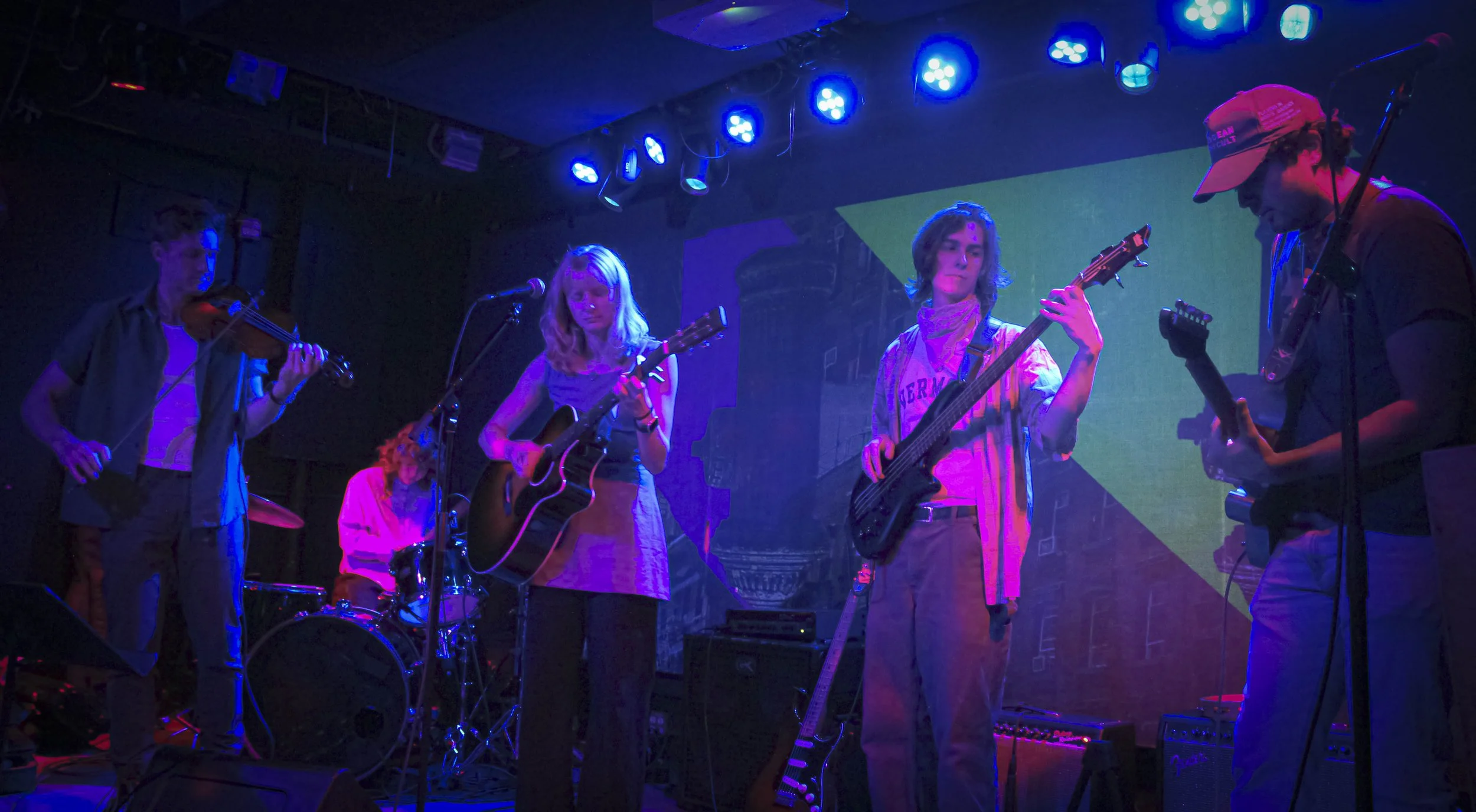
Caroline Tanner — Lead vocals + Songwriter — @carolineatanner
Mandy Bell — Drums — @mandymbell
Michael cantor — Lead guitar — @michaelcantor3
Callum Robechek — Bass + Songwriter — @callumrobechek
Jimmy Drancsak — Fiddle — @jdrancsak
