
An Interview With be55am
Article by Mollie Smith
Hiroshi (洋) isn’t just making clothing. They’re making the future.
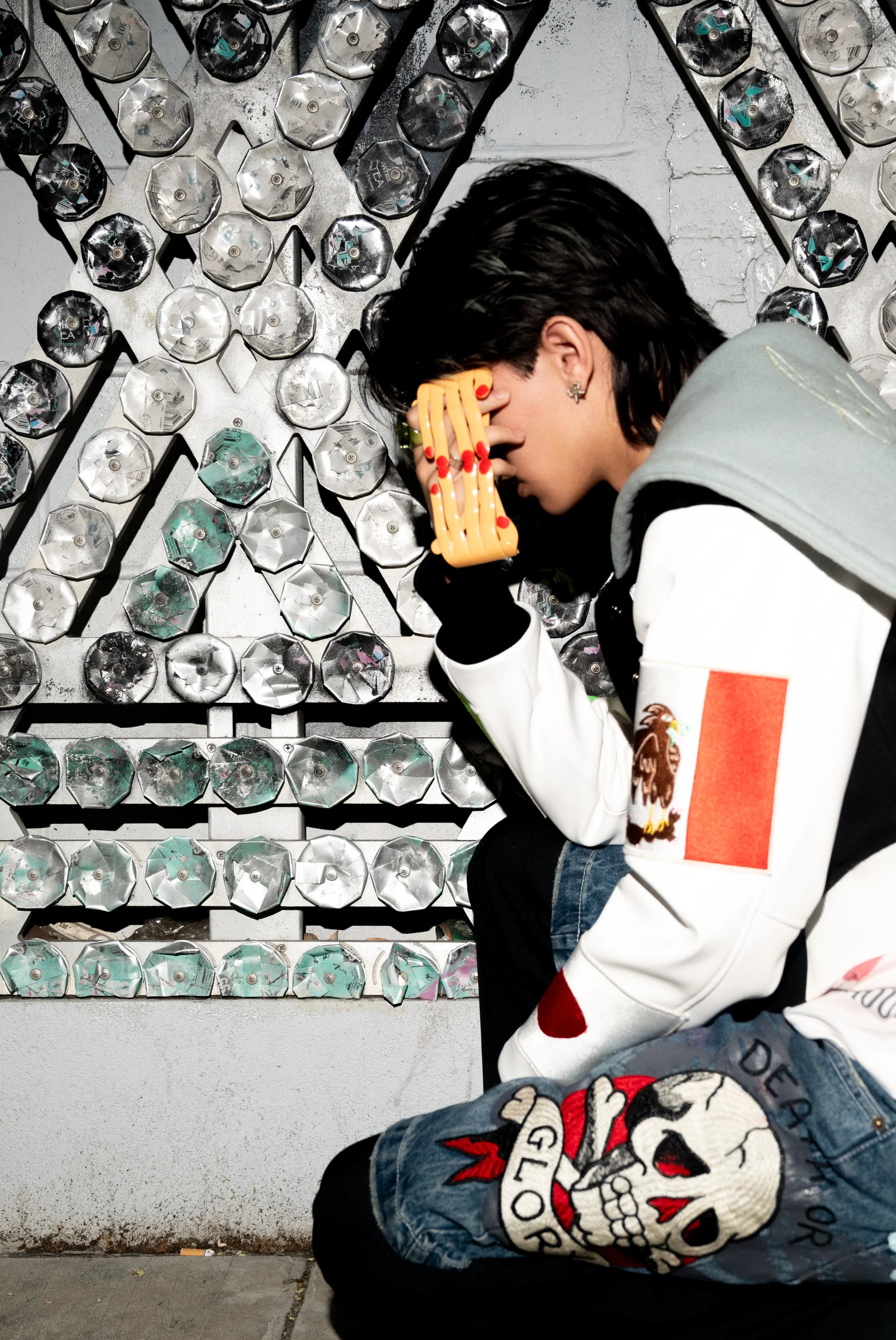
The 22-year-old fashion designer graduated Bentley University this May and shot straight into creative output. The last seven months have seen a fashion show, two collaborations with streetwear brands Prophet Envoy, and Cha$e a bag co., and the launch of Be55am’s own Collection One, featuring wearable t-shirts and zip-ups. That’s not even including the custom merch they created for their close friend, the indie-rapper Maxxant. Although Hiroshi admits their creative process is toxic, their impressive output is undeniable.
The young creative draws inspiration from everything around them, ranging from Western movies and Japanese designers to the multiculturalism they grew up with in New York City, as a Queens native. Hiroshi thinks of clothing and creativity as a unifying force, where social responsibility and inclusivity remains front and center; it’s the same ethos that inspired them to donate a portion of all profits from their collaboration with Cha$e a bag co. to refugee communities through Go Project Hope and the World Food Programme.
We sat down with Hiroshi to discuss the future of fashion, democratising creativity, and incorporating the cultural overlap and exchange of New York City in an international context.
Mollie Smith: How would you self-describe what you do, creatively? How would you describe the clothing you make?
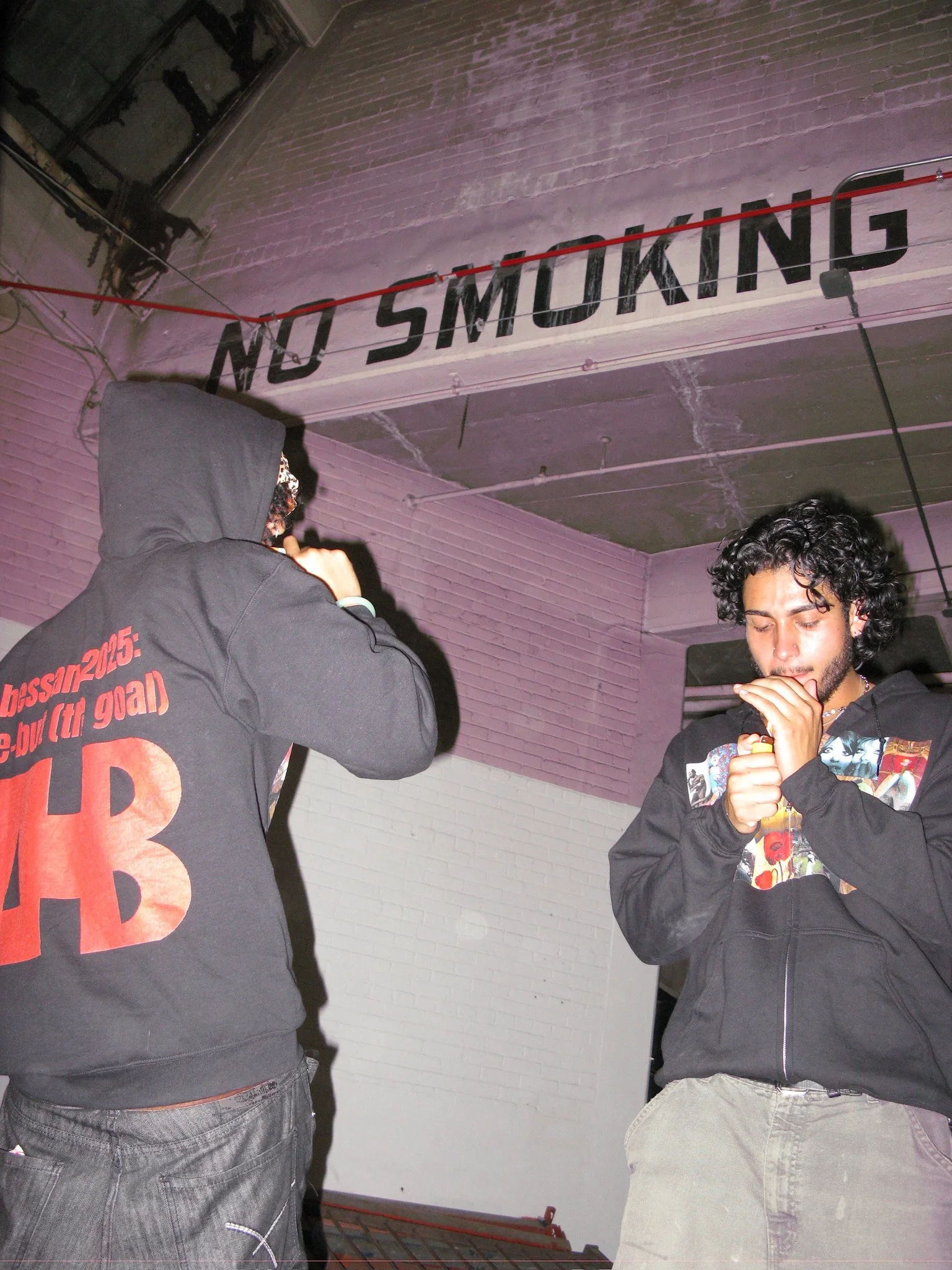
Hiroshi (洋): I’d say currently that I’m predicting the future and also making clothes that tell stories about my life here in New York City mainly. Sometimes I also direct shoots, like music videos and photo shoots. I’ve done a lot of freelancing, and it’s been pretty fun. When people ask what I do with fashion, I always say that I predict the future for a living.
MS: How would you describe the clothing that you make as fitting into that?
洋: I think definitely the stuff that’s available to buy is more along the lines of streetwear, but I honestly don’t even know what that word means anymore. I think when we were in high school, it had a really specific meaning in terms of the influence of skate culture and hypebeast culture, but nowadays, I feel like it means anything that you could wear out onto the street. Part of my work is using other designers as reference points. I’d say there’s a bit of early [Maison] Margiela in there, in terms of everyday pieces of clothing and small ways of trying to elevate them. I’d say there’s also a bit of [John] Galliano in the sense that I feel I’m making looks and outfits, not just singular pieces. Especially with my first runway, I really felt like I was creating very three dimensional characters. The outfits come after that. I’m really focused on attacking it from a philosophical angle, a little bit. I think a lot about the concept of a look or a piece of clothing, more than the actual garment construction itself. I’m not that much of a nerd, but I believe in using clothing to tell stories.
MS: What does your creative process look like?
洋: So…my creative process is very toxic. I just started therapy yesterday, [Laughs] and we were actually talking about this. In full transparency, the only way that I got my runway show done was a week straight of all-nighters. Before the show, I was still sewing the morning of. I think it’s really a sense of, like, my critical process from start to finish and how I get really burnt out after I exert effort into something, so I often take a couple of months after to just like, chill and dissociate a little bit and eventually feel so empty that I’m ready for new creative material. I go searching for it; one of my favorite things to do is just sit in different parks in New York City and sketch people’s outfits to get a pulse of what interests me, and also what people are actually wearing in real life. It’s very important to me that my clothing is functional. Maybe not functional, but practical. I like doing things that are novel, and because it’s my own brand, I don’t necessarily believe in paying so much homage to things.
One of the advantages of having your own brand is that you have total creative liberty to do new stuff and establish yourself by taking those creative risks. It’s difficult to get there if you’re constantly mimicking or paying reference. I watch a lot of movies, and film is also pretty integral to my creative process. Westerns, and this concept of the desert have been super interesting to me. I rewatched Holes the other day. Once I’m done with the aspect of gathering inspiration, I do a lot of work conceptually so that I feel like my collection has a strong message or something worth saying. Then I ask myself, Okay, How do I translate this into clothing? And what kind of personalities can I use as vessels or vehicles to get that point across? I go in like a maniac for a few weeks straight, get no sleep [Laughs], ignore all the responsibilities of my life, and boom, a runway show pops up!
MS: Are you self-taught? Do you have formal training when it comes to pattern-making and design?
洋: I’m completely self-taught. I did an apprenticeship for two weeks at a local tailor in Mexico, in my grandmother’s neighborhood. That’s the only formal training I received, but it was also probably the most useful because it got me a lot more comfortable with sewing and understanding clothing. My biggest learning experience there was gaining an understanding of how in other countries, a Tailor is such a pillar of the community because they provide these crucial services. I thought it was beautiful how everyone had their own specialty and purpose; like a cobbler or a butcher, and how these dynamics shape communities and their skills. It inspired me to make my brand, Be55am, more of a community project and ensure that I was serving my community. I feel a really deep sense of responsibility to make sure that this is clothing that people wear and not only just throw on. I want this to be something that they could actually feel confident in, and want to keep. One of the best things that ever happened to me was hearing someone wore a Be55am piece on their first date!
MS: Have you had any other funny or interesting places where people have worn your clothing, or told you about wearing it?
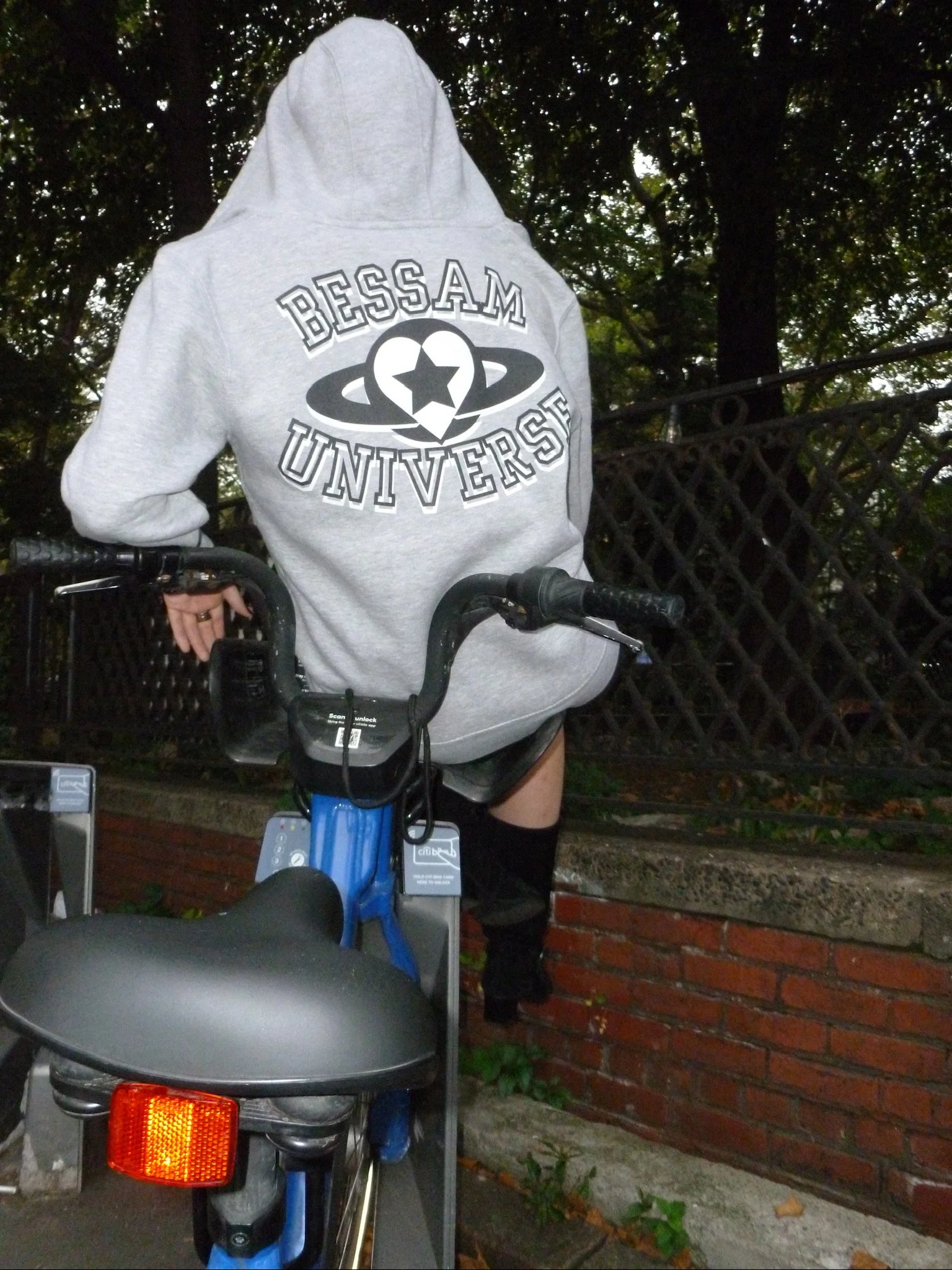
洋: Definitely when people wear it internationally; I’ve had people bring it with them to Cairo, Sydney, and it’s a lot of fun. It’s also just seeing moments that people make with it, or when people post themselves wearing it on Instagram. Instagram can be a digital portfolio, and so for people to feel like they want to represent me is just a huge honor. It’s something that I don’t take lightly at all. I dm on Instagram to make sure that every single person who orders gets their order, and that they’re happy with it.
MS: Has there been anything that surprised you about the process of making your own clothing?
H洋: Yeah, I mean definitely learning the way that different fabrics react to being sewed is something I didn’t really anticipate; a lot of technical aspects that I’ve picked up. It’s also made me realize how bad mass-manufactured clothing is, because it’s so impersonal. It’s not made for the body, but for an approximation of what a body should be. Making my own clothing has been very refreshing, but also very draining at the same time. I find myself constantly navigating this battle of following the rules in terms of making traditionally versus improvising. I try to upcycle a lot, and focus on sustainable implications. It’s the difference between buying deadstock fabric and fabric that’s produced to be sold. I consciously try not to be wasteful with my patterns and such, but it’s also super hard to be zero waste and it’s definitely something I’m grappling with in terms of how I minimize my carbon footprint as a brand, and an individual.
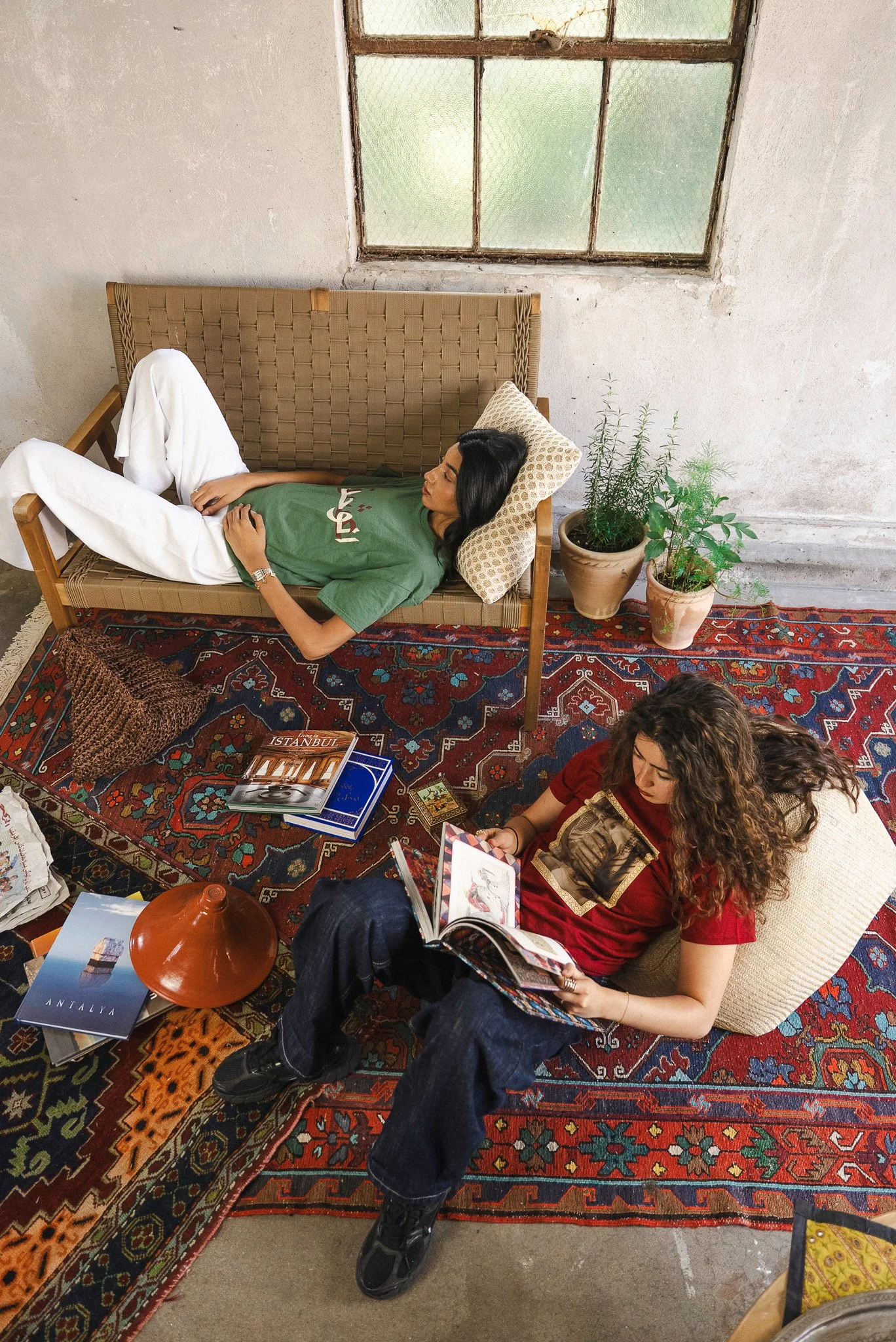
Stills from be55am’s collaboration with Cha$e a bag co.
MS: I know you spoke about Western movies, Margiela, and Galliano a bit. Are there any other specific inspirations that stand out to you?
洋: Yeah, I gotta shout out my girl Rei Kawakubo from Comme des Garçons. She’s easily one of the best designers of all time. She’s so cunning, she has such a sharp wit, and very strong perspective. It’s really evident in the work that she does. What I like about her is that she’s very different from me in the sense that she really doesn’t care if it’s wearable as much, and she will do shows dedicated to very conceptual things and really not care if it even gets sold. I also think the way that she’s created a dynasty with Comme des Garçons is so impressive — they have so many sublabels, and they own Dover Street Market, which I think is the greatest retail store on Earth. I think it’s super sick that she just went out there and did it as a Japanese woman when there was no representation, no people that looked like her, and made it to Paris. People still had stuff to say about her, and she was like Fuck that, I’m gonna make my own empire. She was never willing to compromise her beliefs and it worked out pretty okay for her at the end of the day. Also along that line of Japanese designers, I have to mention Jun Takahashi of Undercover, Junya Watanabe, who was Rei’s protégé, and Issey Miyake, who went to art school with my grandfather, actually!
MS: Awesome, so it’s like generational osmosis with talent, basically.
洋: Exactly.
MS: You’re touching on this here a bit, but I know you’ve also been very open about how a lot of your pieces are very referential to your heritage. Is that another thing that you would consider an inspiration? How do you think that comes through in what you create?
洋: I think culture is an extremely strong part of my identity. I grew up super multiculturally, and I struggled to find my niche because I don’t fit into all of them. I created this unique, constructed identity in the end that I have total control over. I purposefully made Be55am be titled after my family name, and I did that to make myself a promise that I would keep it going. I thought, I couldn’t abandon something that I had my name on, you know? I think to me, it’s also very important that I represent my family and the cultures that I’m a part of and really accurate and also prideful, as well, despite not being nationalistic. I think a lot of us kids from Queens come from these incredibly mixed backgrounds and grew up in this multicultural place. A large part of Be55am is a love letter to multiculturality, and not just the ones I’m a part of. I have so much love for Palestinian culture, and I recently did a collaboration with my homegirl who’s Iranian and Turkish, and I’m always looking for new ways to include other cultures I’m in and connected to. As someone who’s from three completely different continents, I think it allows me to reach more people and find common cultural touchpoints with so many people. I think as a human race we can be so divided by superficial traits, but we can always find common ground.

Hiroshi alongside Queensbaby Music collective founder Maxxant.
MS: I know you also mentioned music as an inspiration. Do you find that for you, there’s an overlap between the music you listen to and the clothing you create?
洋: Yeah, definitely. When I was creating my looks for my last show, I actually attributed a song to each one and my whole runway soundtrack was one song after another. Each look got its own song. For me, it’s the same concept behind why so many people love to put music behind their Instagram posts. It’s that connection between the visual and auditory. It’s emotionally impactful, even though we’re being desensitized to it due to being on our phones all the time with this algorithm and such. But I think there’s something really special about being able to connect a visual to a song, and also a memory that plays into that as well. To me, music can provide guidepoints into my own past, in ways that I can remember. I love it, and I have a lot of friends who are musicians as well, like Maxxant and the whole Queensbaby Music collective. It’s nice to share art, especially when you’re not in the same discipline. Another inspiration I feel very close to is Andy Warhol — I read his biography, and it was really refreshing and heartwarming to see that someone that multidisciplinary and constantly evolving could be such a pinnacle in his own field. I relate to how he was this dude with gray hair even when he wasn’t old, and wanted to democratize art in and out of his field. He’s sort of the MVP of cultural memory and utilizing that in commercial or noncommercial art.
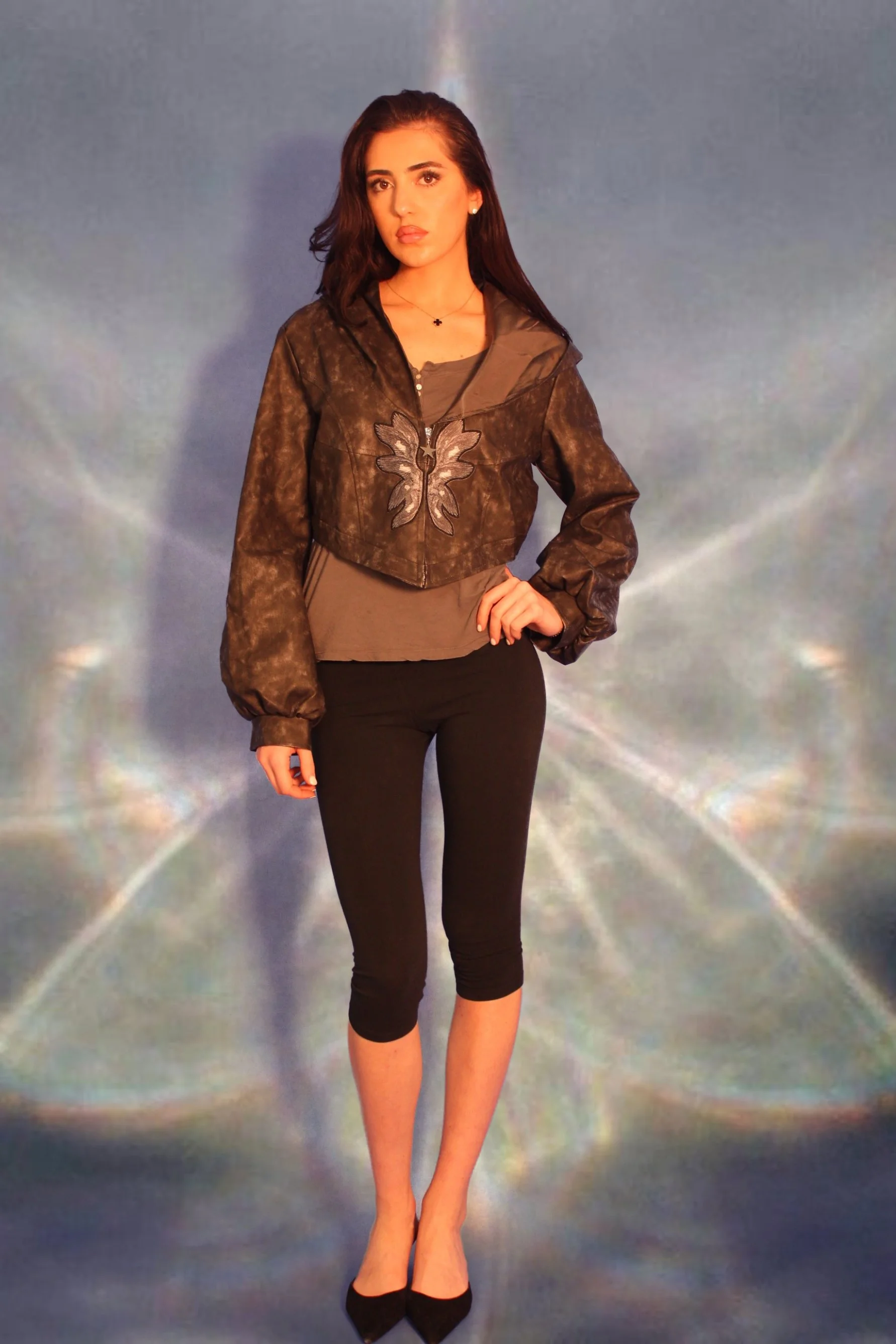
be55am’s Seraphim Leather Jacket, made in collaboration with Prophet Envoy, can be found here.
MS: Totally. You just collaborated with Prophet Envoy — can you talk a little bit about that process? Are there any other collaborations we can look forward to seeing?
洋: The way that this collab happened is actually really funny and I love telling this story, so I’m glad you asked. So before I did my first runway show, I directed my first school fashion show, which hosted a lot of designers. During the process of that show, I invited Rhesa, who is the owner of Prophet Envoy, to be a designer. I took a chance on him, and he totally repaid my faith. One day we were at a modeling practice, and at the time, I was kind of really invested in the beginning stages of my creative process. I was just messing around, and didn’t even have my own brand yet. I was just sketching clothes and ideas, thinking about who I could even sell them to, instead of making them myself. I didn’t think I was like an artist, and I thought that I was too corporate. I was sketching, and he came over to me and was like, what are you sketching? I had just finished watching Neon Genesis Evangelion, and a lot of the show revolves around these biblically accurate angels. I was super interested in this idea, and I read the Bible in a non-religious way to compare it to this idea. I was designing this medieval cloak jacket with these really weird monk-like proportions, and I just slapped what I thought a realistic angel would look like with wings and eyes on the back.
He saw the design and was like, let’s make it. [Laughs] I was like what you mean?! He was like, nah, you have real talent as a designer and you should start your own brand. This idea is good enough to start a brand over. I was like, What?! That was the first time anyone had really believed in my abilities in fashion beyond putting together an outfit or styling. It felt so gratifying to see someone actually look at me as an artist, and just believe in my design enough to actually wanna put real money and time behind it. It’s been over two years since that moment happened, and we finally released the jacket and it’s doing so well.
For him to take a chance on me when I didn’t even have a brand, and pay me a share of the profits and keep his promise and teach me about manufacturing was so mind-boggling. It’s nice to know that there are people like that out there, in the industry. He’s so genuine, and he ended up taking our jackets to Complex Con and they ended up performing really well and getting some crazy placements. In terms of the future, I really want to collaborate with one of my best friends Tia Hashem, who owns a brand called Salwa. She does only couture, so it would be interesting. She’s against manufacturing, but I’ve been slowly convincing her to try otherwise. I’d love to do a piece with her one day.
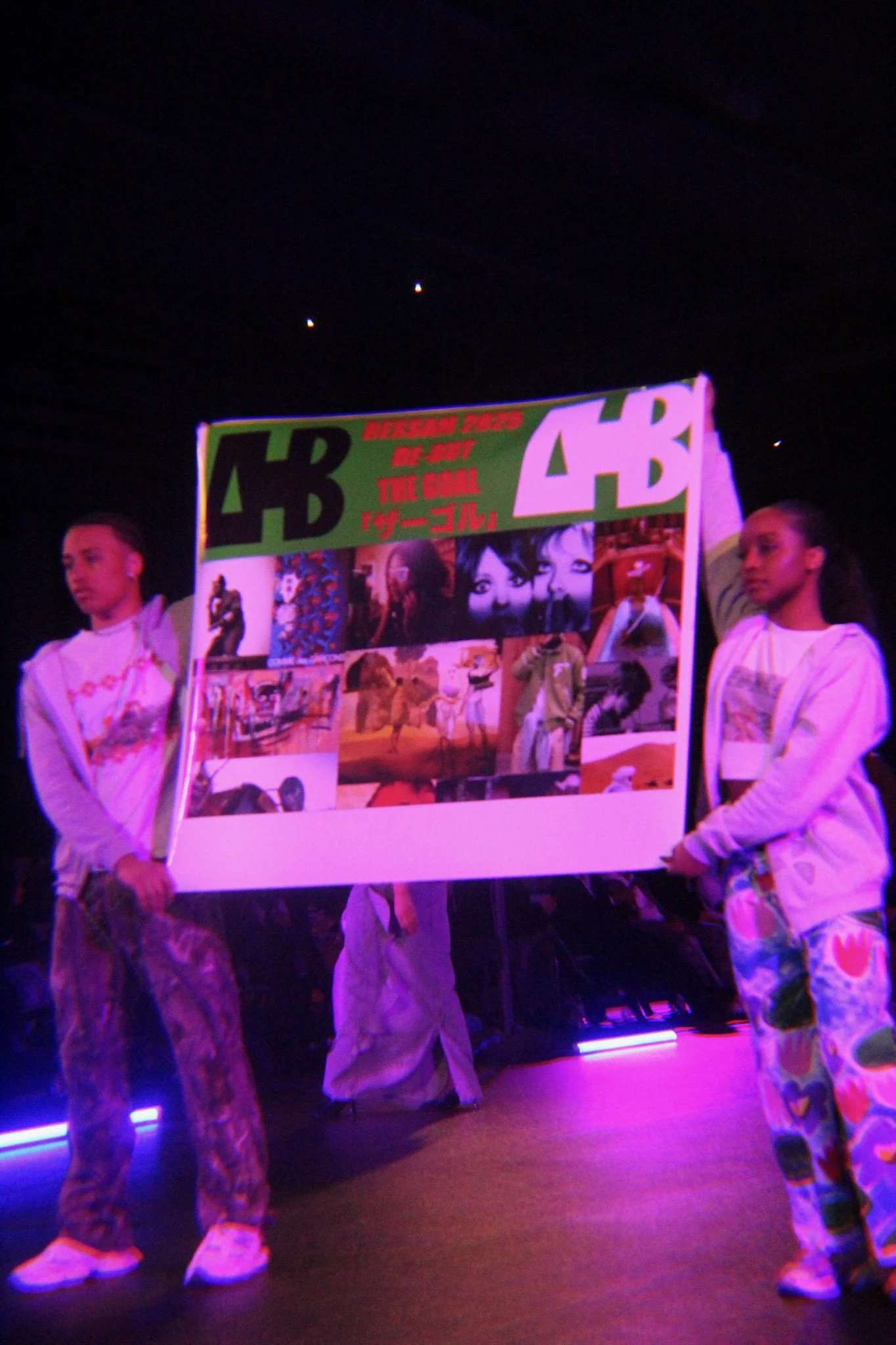
A still from Hiroshi’s most recent runway show.
You can find Hiroshi’s brand, Be55am, on Instagram @be55am, and on their website by the same name, linked here. You can find updates on upcoming drops (including their recent collaboration with Prophet Envoy) on Instagram.
