
Into Bass Capital
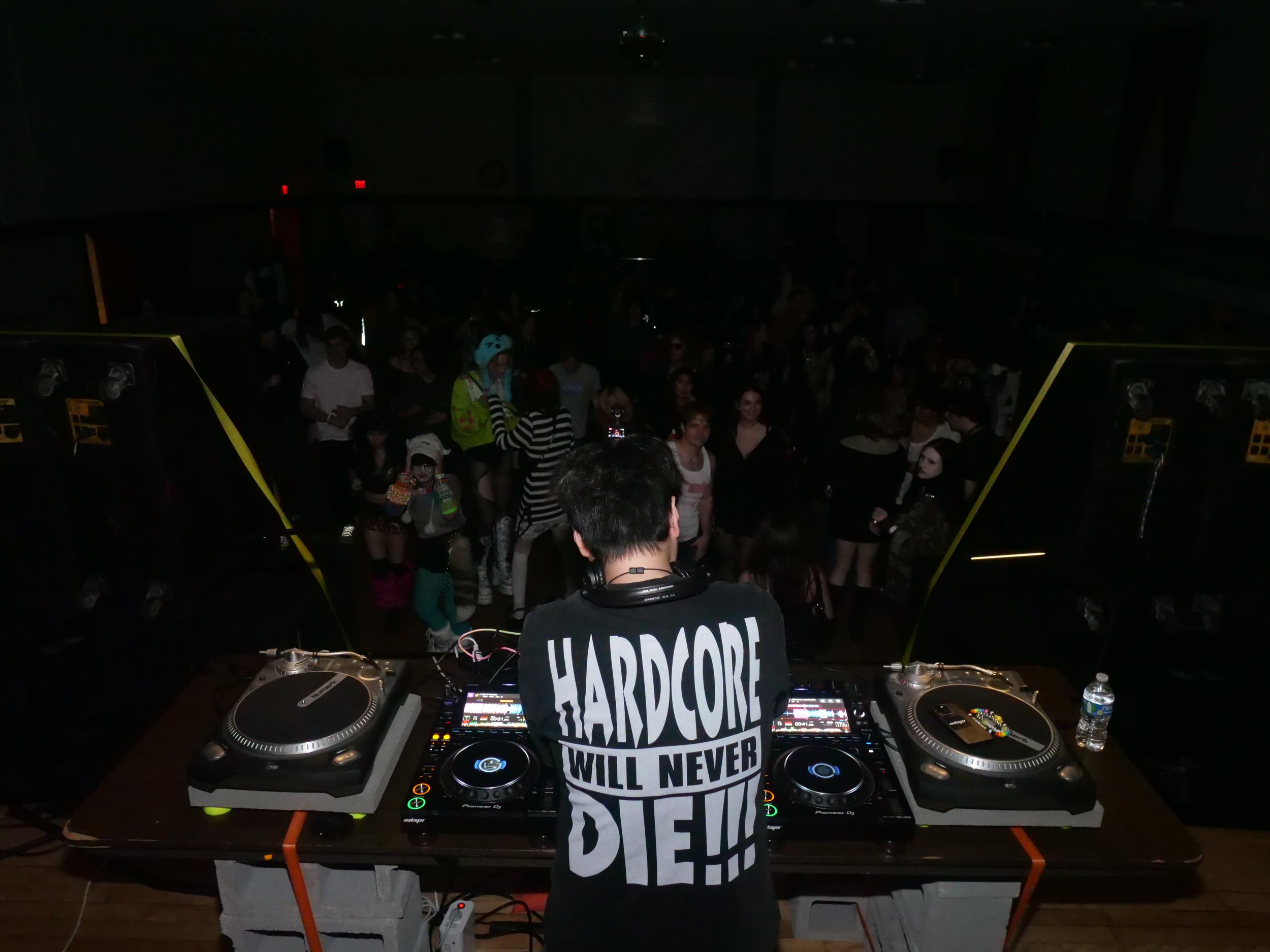
Article by Max Pociask, who you can find on substack here.
Images by Owen Steck (@ogiebod on Instagram).
It’s midnight, 36 degrees, and I’m outside smoking a cigarette with a man who claims to be the clone of a renowned particle physicist. Hell yeah, I tell him. My friends are inside rolling on molly and scoring free tickets to the after party through the power of weaponized femininity. Rusko’s doing the next set, and he’s an OG, the real deal, everyone tells me. I’m surrounded by people trading Kandi and throwing light whips and talking about Cheeseman Park in the morning. This venue has a bathroom attendant. Breath spray? Half the crowd is on MDMA and this guy’s talking about breath spray.
Denver Colorado is known to most of the country as a place IPA obsessed white guys go when they die. This is admittedly true. But there’s another group of beanie-donning sweat stains who built a behemoth of subculture in the mile-high city: Bassheads (pronounced ‘base’). I’m not talking about some tech-bro, “SanFran”, John Summit ravers — I mean the proper tunnel dwelling, nitrous spewing, get-a-tattoo-at-the-afters crowd. These are the characters who build a scene from the ground up. These are the kids that made the mainstreaming of electronic music possible in the U.S., the hard working party people who culturally subsidize your soft-rave lo-fi fintech coffee chat. You fascist.
It’s no secret that party culture has changed. Drinking is down, drugs are down. Going corporate is cool, somehow. But while these stats seem healthy, our trend towards culturelessness doesn’t seem to make us any happier. Suicide is rising, mental illness is blue-chip stock, and 12% of Americans don’t even have a close friend.
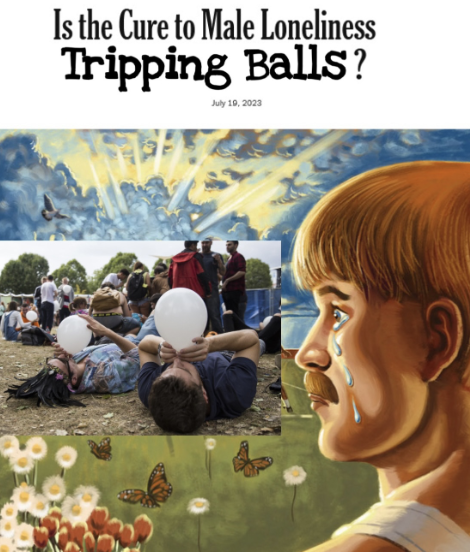
How I feel writing this rn.
Despite our digital world’s social plague, headbangers in the Bass Capital of America are partying like it's 2007. Despite EDM’s sketchy venues and notorious drug culture, Bassheads built a bridge between party life on the edge and community collaboration to make all (most) feel welcome.
Why Bass Capital?
Denver got this nickname (as far as I can tell from the facebook comment historical record) around 2011 after it became the earliest U.S. city to routinely book and support EDM acts. Local promoter Nicole Cacciavillano, who started booking shows in 2007, is often cited as the major force for bringing dubstep acts over from Europe, throwing gasoline on the already burning electronic scene. What began as one woman’s proactive fight for the artists she loved blossomed into the premiere destination for dance music fanatics across the United States.
Great, thanks for the history lesson, Max. We get it. Can you talk about doing drugs again?
Sure. So Rusko’s set ends around 1am, and the girls have scored their free tickets to the afterparty. An uber drops us outside downtown. We walk, shivering, to the last brick building in a liminal landscape of luxury 5-over-1’s with awful names like “Waeve.” There’s an unmarked door and lime green hallways. Stepping past the gaggle of bouncer groupies, I feel like I’m in the roller rink from my childhood, except the walls shake with 808s and we’re buying nitrous balloons for ten bucks.
Rave culture is synonymous with hard drugs. Justin, a young man I met outside Church (A 19th century cathedral converted into a venue), got into the scene at 16, and likened the abundance of drugs around him to Plato’s Allegory of the Cave. When you’re exposed to this behavior from a young age, it just seems normal — until somebody else points it out. You might end up believing you’re a clone of a deceased particle physicist, or worse.
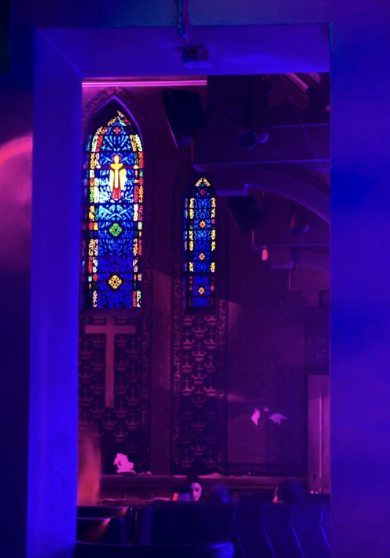
Yes, it’s in a real church.
Fortunately, the rave scene does have a number of guardrails in place to make sure most people don’t go off the deep end. What really makes the bass scene, or any subculture, so hard to quit, is it provides the sense of community you can’t get from the TikTok Shop or Chipotle or even getting shitfaced at trivia. Prepare for this to get corny.
1. It’s Nerdy.
Like, super nerdy. The first thing you’ll notice after being inducted to the scene by an experienced raver is how much vocabulary there is to learn. Wooks? Flow? The micro-genres alone are enough to fill college courses. What do you mean Gabber and Techno sound the same? People follow soundcloud pages and hardstyle personas like it’s star trek deep lore.
Eventually, I step out of the afterparty to help my friend discharge stomach acid in the snow. Shortly after I fall into a wonderful conversation with the kid who sold me nitrous. To me and a few others, he anxiously pitches his DJ name: MissingNo. I didn’t know he was naming himself after an obscure technical cheat in an early pokemon game, but other folks in the circle did.
As MissingNo shows me, nerdiness is the core ingredient here — so much so that it’ll come up in my following two points. When you break it down, all of humanity’s niche interests can be called nerdy — from LARPers becoming actual blacksmiths to baseball fans encyclopedic knowledge of statistics. You need a critical mass of crafty weirdos to keep a subculture alive. Passively interested thumb-scrollers aren’t going to fill convention halls.
2. It’s Empathetic.
It’s not necessarily nerdy to express empathy, but when I tell you the unofficial motto for EDM is P.L.U.R. for Peace Love Unity and Respect, you might feel an eyeroll kick in. Similar to a punk’s etiquette for moshpits, Bassheads live by a code of mutual respect and concern for the collective. Someone falls? Pick them up. Someone’s going a bit too hard? Bring them some water. Someone’s naming themselves after a pokemon glitch? Rock on, man.
When you build a culture which encourages hard drugs and extreme physical exertion, you need a set of virtues to ensure community habits are sustainable. PLUR keeps the community safe, and, even in less regulated environments, ensures that people look out for one another. Let’s say you want to go to a show but all your friends are at Electric Forest this weekend. It’s a good thing forward thinking ravers built Radiate, an app for concert-goers to find like-minded peers and concert buddies. While bad apples exist in all subcultures, EDM has a strong network of community gatekeepers who are resourceful, kind, and, to my next point, deeply creative.
3. It’s Creative.
This article was originally supposed to be about flow arts, but apparently gloving is brainrot now.
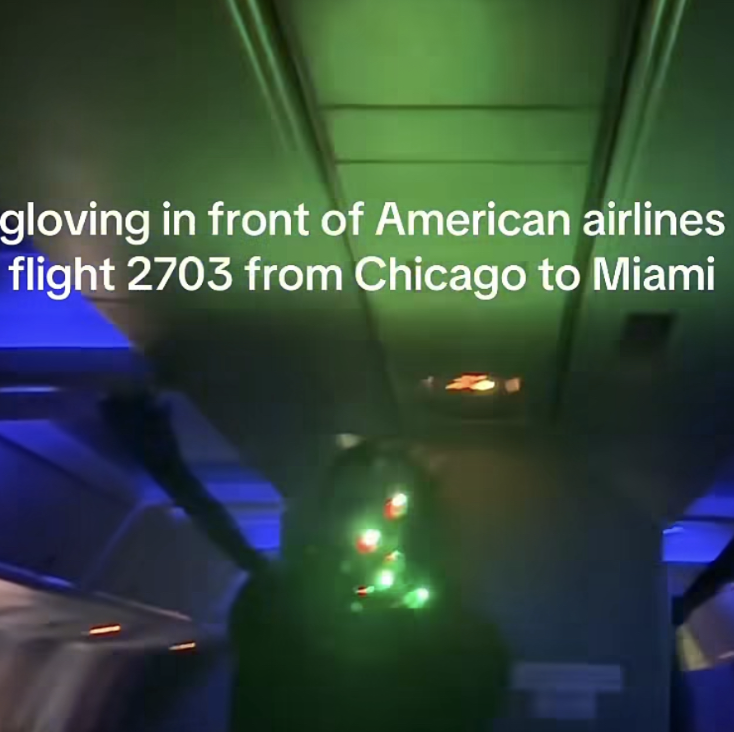
Sure, it’s an easy target. The flow arts, like gloves or stars or light whips, are a lot cooler in person, when you’re free from the mental chains of an iphone screen. Hobbyists pull from circus traditions and prop dancing culture from all over the world, but this isn’t the only game you can play on the dance floor.
My friend Kyleigh swaps “Kandi” with people she meets at shows. No, that doesn’t mean pills, at least not right now. Kandi are beaded bracelets people make (not too different from something you’d make at summer camp) and trade amongst strangers to demonstrate PLUR and to cherish the memories of past concerts.
Kyleigh describes the somewhat corny traditions as “liberating.” When your community holds peace and respect as core mores, you can express your creative instincts (and be an obvious beginner!) without fearing judgement. And it’s not just that it’s easy to “be yourself,” EDM culture actively encourages self-expression with its plethora of entry-level funky hobbies.
Where Did The Party Go?
My greatest fears about EDM’s reputation have already come true. To “go raving” in the majority of young people's understanding, is to have a job in Private Equity, spend $5,600 on a trip to Ibiza, and spend most of your time trying to find out which nightclub has the highest rating on Beli. Perhaps it’s my own cynicism. Maybe people still think EDM is for weirdo druggie losers (here’s to hoping!), but it’s undeniable that finding an underground scene is not algorithmically sound. “Come with me to this rooftop bar” will always fare better than a 6 band flyer made by a hustling artist in MS paint.
It’s true that corporate money eventually takes a wrecking ball to cultural innovation forged by hard working people in the underground. The Church in Denver was recently sold to a company based in Los Angeles (gross). But even if good things don’t last, you should still do everything in your power to have a good time.
When less evolved people complain about their anti-social tendencies, the two most common complaints are that it’s either too expensive, or it’s too much effort to socialize. A ticket to a show in the Denver sewers will run you at the most $20. And if you’re worried about social anxiety, go re-read the section where a guy is named after a pokemon glitch and everyone thought he was cool. You have no excuse but to dance.
If this was one of my typical “urbanism” blog posts, I might have written about how the Church is an awesome example of adapted re-use. There’s so much power in transforming a structure, a lifeless object, into an institution filled with human emotion. Rather than droning on about architecture, though, I’ll leave you with a quote from Justin, the lifelong raver who made pilgrimage to Bass Capital. He explains the feeling of joining with friends and strangers alike to give space purpose in the name of Rave.
“The best vibe in the city is Sunday afternoon in Cheeseman Park. It’s just people having a good time, spinning, yo-yoing. Flowing in one word: expression.”
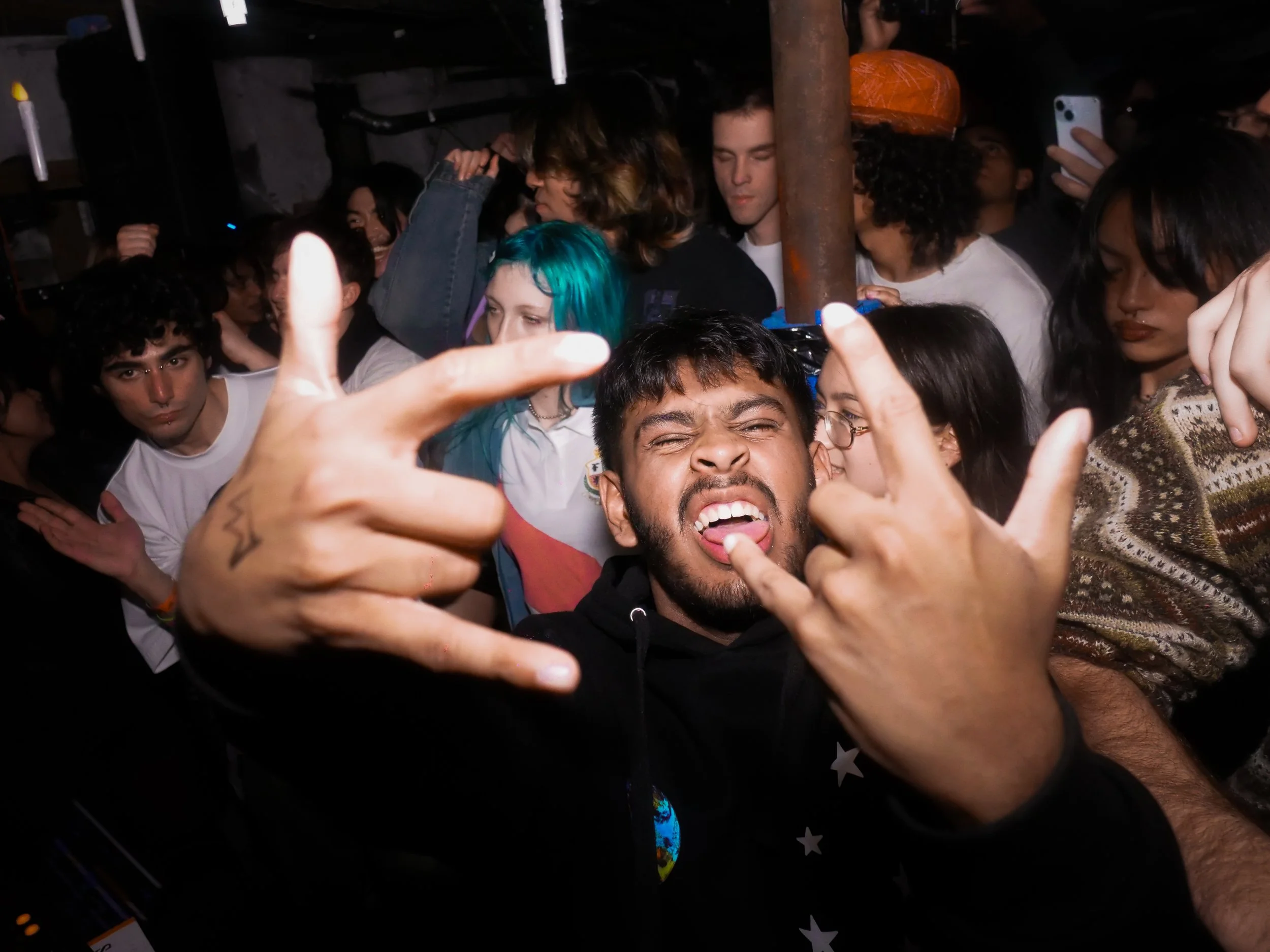
Images by Owen Steck (@ogiebod on Instagram), of the Boston underground scene. A huge thank you to Owen, Kyleigh, Rusko, and all the Bassheads of Denver for keeping party culture alive.
